Pinterest Perfection

I’m sure many, if not most, of you have heard of Pinterest. I first heard about this little site where you could “curate” your own visual boards over two years ago when the site was still in Beta testing. I did some quick researchpinterest-logo on the trusty interwebs and lo and behold, I was able to track down the Pinterest CEO to his person twitter page, where I began a barrage of direct messages begging for a beta tester invite. I got it. His name is Ben, by the way, and he’s super nice. I was one of the first few thousand people to use the site, and use it I did. I currently have over 30 boards, 981 pins and 125 followers. When Pinterest first started it was much more of an art and design crowd. The cool kids who were developing the site had no doubt invited their other cool kid friends who I’m sure were all interior designers, graphic artists, and web developers in San Francisco (that’s where the company is based, not the valley, which is why the site and its people are so cool) to give it a whirl. As Beta opened up to user invites, and the site became a real, live thing, it became much, much, much more crafty, crock potty and crap to do with your kidsy. But you know what? I still love it. Despite the fact that I have to sift through hundreds of pins of maternity photo sessions to get to the thing I’m looking for, despite the fact that when I search the food category I have to ignore a million recipes that suggest throwing four different kinds of canned Campbell’s crap into your slow cooker and feeding it to your family of 10 for less than .30  cents a serving, I still think it is an awesome, amazing thing. And every once in awhile, you run across some real gems.

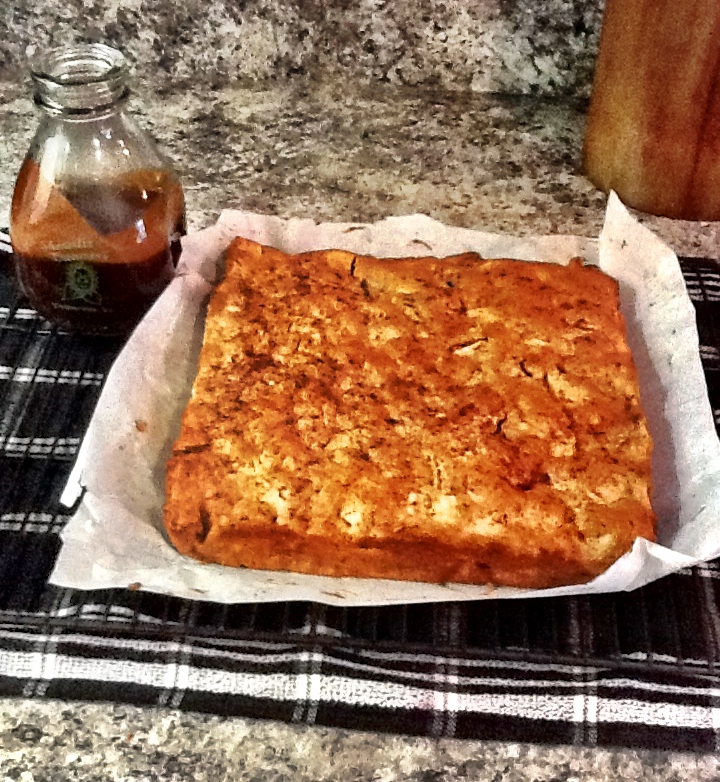
On Wednesday of this past week, I made THREE recipes for one meal that I found on Pinterest: A Roasted Garlic salad dressing, a rosemary and Parmesan overnight bread, and an Italian style beef and butternut squash stew. They were all the kind of things that keep me obsessed with the site. Diamonds in the rough.

The Roasted Garlic Vinaigrette is a MUST try to anyone who loves garlic on the level that I do. Two heads of garlic go into this dressing. And while you do have to roast the garlic for a good half hour, the dressing itself is really easy to make, and you probably have most of the ingredients on hand. I’m currently obsessed with making my own salad dressings and have tried several I’ve found on Pinterest, but this one is my favorite.

From Fat Girl Trapped in a Skinny Body:

Roasted Garlic Vinaigrette

pinterest meal salad dressing

Ingredients:

  • 2 heads of garlic, roasted and peeled
  • 1/2 cup extra virgin olive oil
  • 1/4 cup apple cider vinegar
  • 2 tbsp lemon juice
  • 1/2 tsp kosher salt
  • 1 tsp black pepper
  • 1 tbsp honey

Method:

  1. Cut the pointy top off of the garlic. Brush them with olive oil and roast them in a pan in the oven at 400 degrees for about 25 minutes, until it is starting to turn golden brown and soft. Remove from the oven, allow to cool. Once the garlic is cool, peel the skin off. Discard the skins, save the garlic. *Skin peels off really easily after they are roasted.
  2. Add all the ingredients to the food processor and process until smooth. Refrigerate until ready to serve.*If some of the skin get processed with the rest of the dressing, no big deal, it won’t change the flavor.

The salad dressing can be vegan if you sub the honey for agave. And it is dairy free, with no substitutions!

This dressing is tangy, but has that deep, rich caramelized taste from the roasted garlic. It’s a vinaigrette, but it’s creamy because of the garlic being processed right into it. Keep this for a week or so in your fridge in a covered container.

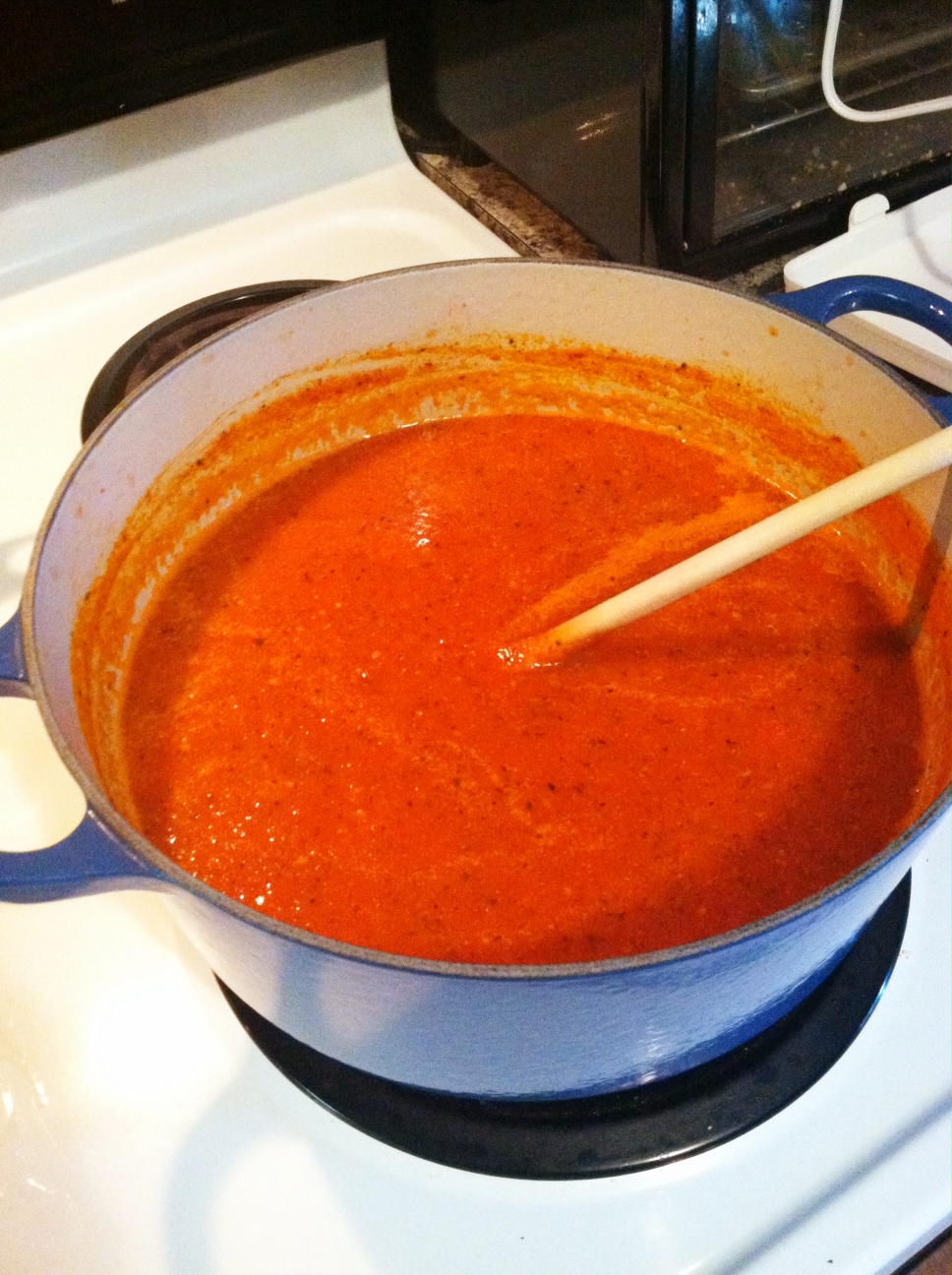
The bread recipe I comes from Simply So Good. I used her basic bread recipe, and put in my own additions. This bread is baked in your cast-iron enameled Dutch Oven (you have one of those, right??). I have a big, blue Le Creuset that is the Pride and Joy of my kitchen. Jeremy gave it to me for Christmas a few years ago. They are usually in the $300-$400 range, but sometimes you can score them at T.J. Maxx for half the price, which I believe is what he did (smartly). Other cast-iron enameled pots are fine for this recipe also, but when you have a Le Creuset, you tend to brag about it. Here is a view down on mine to give you an idea of the size of the vessel you might want to use:

I ❤ Le Creuset

OK, enough about my awesome piece of iron. Here’s the recipe.

Crusty Bread
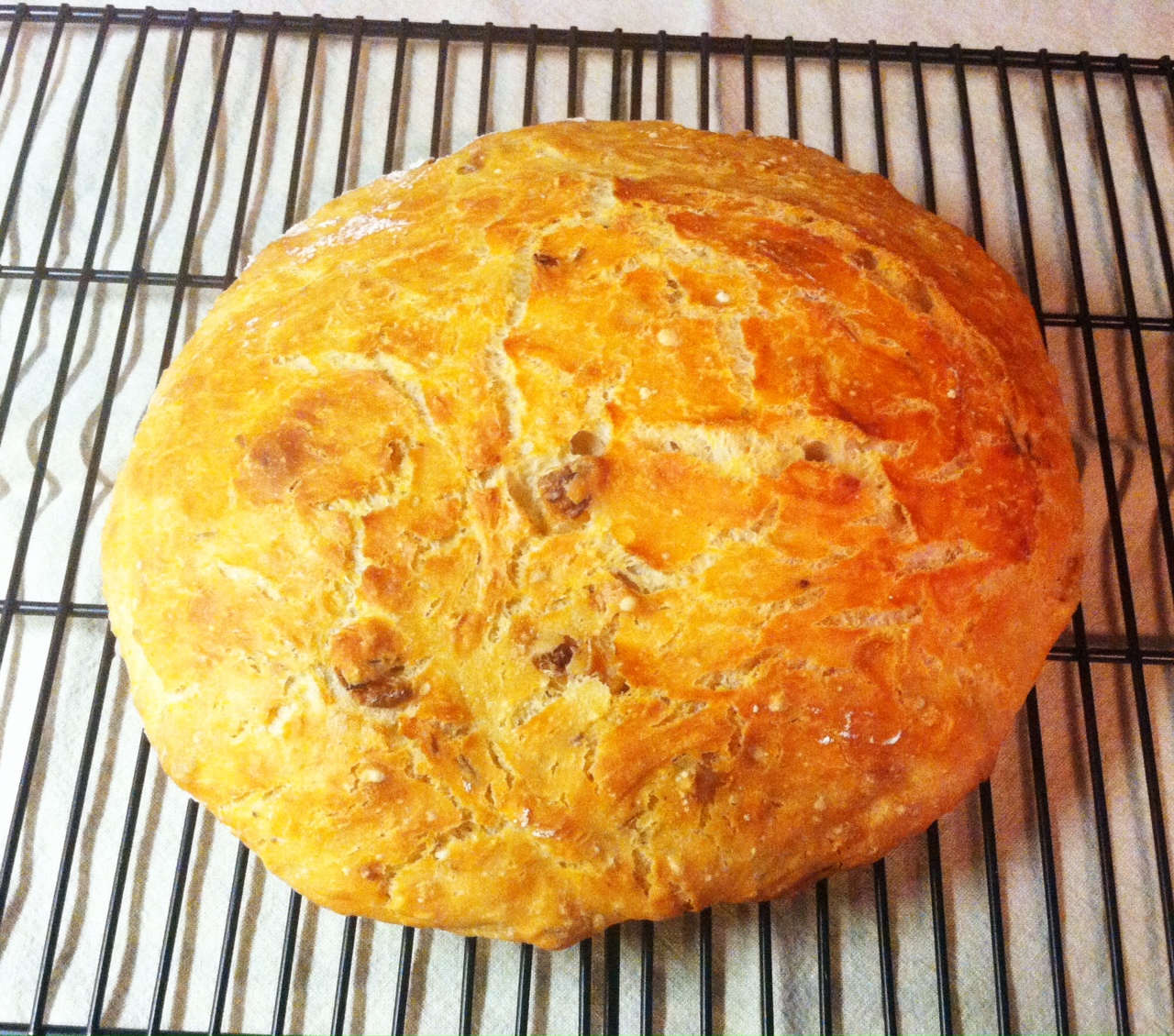
Crusty Overnight Bread

Crusty Overnight Bread

Ingredients:

  • 3 cups unbleached all purpose flour
  • 1 3/4 teaspoons salt
  • 1/2 teaspoon yeast
  • 1 1/2 cups water

 Method:

  1. In a large mixing bowl, whisk together flour, salt and yeast.  Add water and mix until a shaggy mixture forms.  Cover bowl with plastic wrap and set aside for 12 – 18 hours.  Overnight works great.
  2. Heat oven to 450 degrees.  When the oven has reached 450 degrees place a cast iron pot with a lid in the oven and heat the pot for 30 minutes.  Meanwhile, pour dough onto a heavily floured surface and shape into a ball.  Cover with plastic wrap and let set while the pot is heating.
  3. Remove hot pot from the oven and drop in the dough.  Cover and return to oven for 30 minutes.  After 30 minutes remove the lid and bake an additional 15 minutes.  Remove bread from oven and place on a cooling rack to cool.

To this recipe, I added 1/4 cup of fresh grated Parmesan Cheese, 1/8 cup of fresh rosemary (from my garden), and several cloves of smashed and roughly chopped garlic. I added that in to the dough at the very beginning and then proceeded as normal through the recipe.
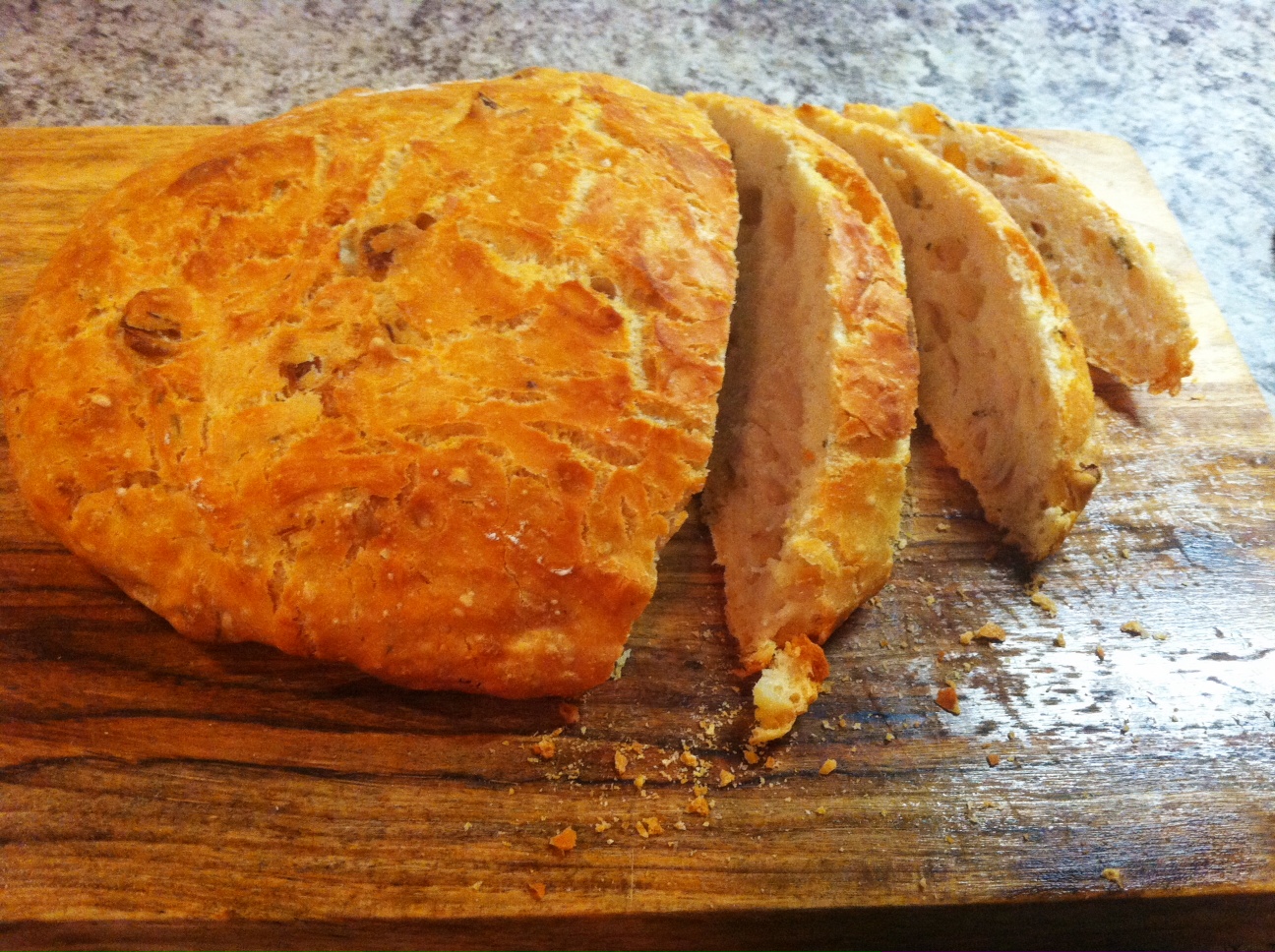
pinterest meal bread cut

This thing turned out beautiful. There is nothing quite like making your own bread from scratch and this is really a pretty easy way to do it.

Finally, the main course – Beef and Butternut Squash Stew from Closet Cooking. I’ll be honest and say there are a few things wrong with the way this original recipe is written, so the recipe below has a few very minor changes from myself, just to make things more clear.

Italian Style Beef and Butternut Squash Stew

pinterest meal stew 2


Ingredients:

  • 2 ounces pancetta (diced)
  • 1 pound beef (cut into 1 inch cubes) (My Note: he doesn’t specify what kind of beef to use here. My suggestion is to get a sirloin roast, if you can find one – that’s what I used. Otherwise a small round roast is fine or chuck if nothing else is available)
  • 1 onion (chopped)
  • 3 cloves garlic (chopped)
  • 1/2 teaspoon red pepper flakes (optional, to taste)
  • 1 tablespoon rosemary (chopped)
  • 1 tablespoon thyme (chopped)
  • 1 cup Italian red wine (My Note: I used a Zinfandel. It doesn’t have to be Italian, don’t stress out, just use a decent red wine that’s not sweet)
  • 3 cups beef broth
  • 1 splash balsamic vinegar
  • 1/4 cup sundried tomatoes (chopped)
  • 1 (28 ounce) can diced tomatoes (My Note: He doesn’t specify drained vs. undrained. Because he does not, I put them in without draining them. It gave my stew a more “soupy” consistency, which I was OK with. If you want this to be more like a traditional stew, then drain the tomatoes before adding).
  • * parmigiano reggiano rind (optional)
  • 1 teaspoon oregano
  • salt and pepper to taste
  • 1 pound butternut squash (peeled, seeded and cut into 1 inch cubes)
  • parsley (chopped) (My Note: optional for garnish. I used a bit of grated Parmesan instead).

Method:

  1. Cook the pancetta in a large pan on medium heat. (My Note: or Dutch Oven. Again, with my Creuset)
  2. Add the beef and brown on all sides in the grease from the pancetta and set aside. (My Note: I coated the beef cubes in flour first. I’ve always done this when searing beef that is basically going to be braised later. It also helps to thicken the sauce a bit, but it’s up to you).
  3. Add the onion and saute in the pancetta grease until tender, about 5-7 minutes.
  4. Add the garlic, red pepper flakes, rosemary and thyme and saute until fragrant, about a minute.
  5. Add the wine and deglaze the pan. (My Note: deglazing means you add a liquid to absorb the browned bits from the pancetta, beef and aromatics. When you add the wine to the hot pan, it will steam up. Take a wooden spoon and use that moment to scrape up all the bits in the bottom of the pan, stirring them into the liquid to create a flavorful base).
  6. Add the beef, broth, balsamic vinegar, sun-dried tomatoes, diced tomatoes, parmigiano reggiano rind, oregano, salt and pepper and bring to a boil.
  7. Reduce the heat, cover and simmer until the beef is nice and tender, about 1-2 hours.
  8. Add the squash and simmer until it is tender, about 15-20 minutes. (My Note: more like half an hour, at best).

This stew was filling, hearty and really quite healthy. Serve it with a glass of the same wine you used in the soup – superb! Always cook with wine that is good enough to drink. When you cook with wine, you are cooking off the alcohol, but intensifying the flavor. If you intensify a crappy wine, you will just get really intense crap. No Bueno.

Pinterest Perfection

Pinterest Perfection

The dressing, served over a bed of Organic romaine lettuce, the garlic, rosemary and Parmesan bread and this stew altogether? Perfection. Pinterest Perfection.
 

New Year: Two Ways

If you’re from the North, Midwest or you’re Polish or German then for you New Years probably means sauerkraut and pork, for good luck. If you’re from the south, it’s “hopping johnnies” or black eyed peas. Other parts of the country and world eat grapes, fish or special cakes to bring luck and prosperity for the new year.  Since Jeremy’s background is Midwestern German and Polish and my background is ….. southern, it’s always a toss up about what to eat each new year, so this year we did both. Obviously.

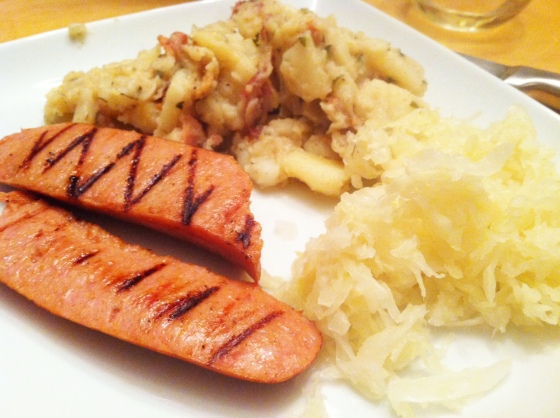
On new year’s eve, before we headed out for a fun night with friends, I grilled up some kielbasa, made a traditional German Potato Salad and served it all with Amish-made sauerkraut and spicy brown mustard. This is the kind of food I didn’t even know about as a kid, and I’m so glad I’ve been introduced to it through Jeremy and his family. That potato salad is on point – click above for the recipe.

Na zda-ró-vye!

Na zda-ró-vye!

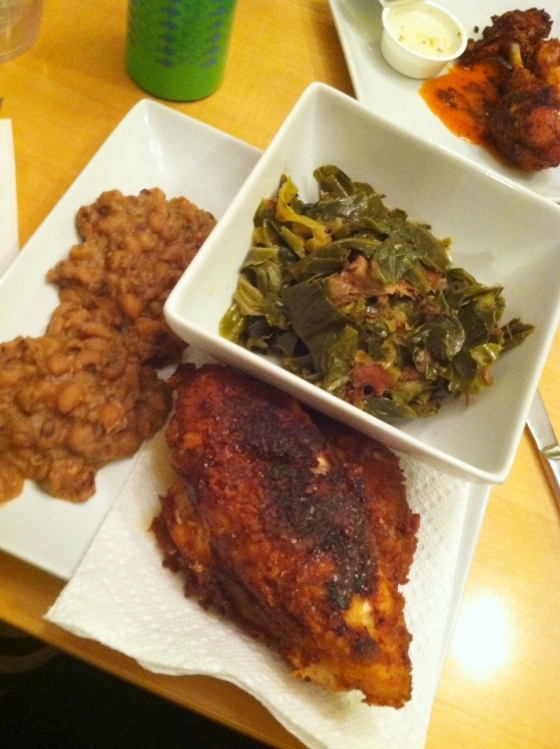
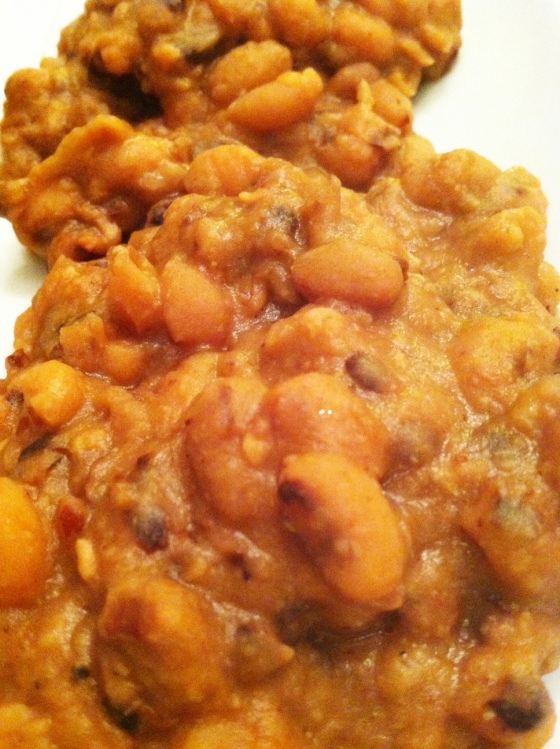
Then on New Years day, we had Alton Brown’s Skillet Fried Chicken with black eyed peas and collard greens. This year I made my black eyed peas in the slow cooker, which eliminated any soaking time you would normally need to make dried beans. All I did was sort and rinse 1 lb of beans, throw them into the slow cooker with 6 cups of water and my seasoning and let them cook on low for 8 hours (or high for 4). I cooked up some bacon, onion, and garlic, which I added to the cooker along with a healthy dose of pepper. They were great this way and so much easier. I wish black eyed peas were prettier in pictures, but they’re just not. Oh well, they are still delicious.

not pretty, but tasty.

not pretty, but tasty.

This has "lucky" written all over it.

This has “lucky” written all over it.

I hope you all had a safe and wonderful new year’s, and I’m looking forward to sharing more recipes, tips, and total failures with you in 2013. Happy It’s Not the Holidays Anymore!!!

What are your new year traditions? What foods do you hope will make you lucky and prosperous?

The root of it all

I just gave myself an award for the most clever blog title ever.

i ❤ beets

It is a shame, I realized, that this blog’s namesake has never really been examined thoroughly. I think in my very first blog post I may have posted a picture of a beet dish I had done, but I’ve never really delved into this amazing little root that inspired me to make this blog. There are a few reasons that beets are the thing I happen to heart. They are available locally, they are available at several times throughout the year and many people don’t like them. Why is that a reason to make beets the central theme of a blog? Because I think I can change people’s minds. I think a lot of foods out there that deserve our attention but suffer general distaste have just been presented wrong all this time. Like the poor Brussels sprout, which I will post about later . . .

Take, for instance, my husband who insisted he hated beets. So I asked in what format he had experienced beets in the past and he said either canned, pickled or boiled to death. Well, no wonder. He also hated Brussels sprouts for similar reasons. But there is a simple answer to both of these food fears and it is this: roasting. Roasting, which uses dry, indirect and diffused heat (such as an oven) increases flavor by caramelization and the Maillard browning reaction. Essentially, roasting enhances the sugars in foods through a process called pyrolysis, which I will not get into, because I barely passed chemistry. But here is what I do know: it makes food delicious. Especially foods like beets, which already have a high natural sugar content, just waiting to be released.

Beets are also so nutritious. Here are some facts from Nutrition and You about beets:

  • Beets are a rich source of phytochemical compound, glycine betaine. Betaine has the  property of lowering homocysteine levels within the blood. Homocysteine, a highly toxic metabolite, promotes platelet clot as well as atherosclerotic-plaque formation, which, otherwise, can be harmful to blood vessels. High levels of homocysteine in the blood result in the development of coronary heart disease (CHD), stroke and peripheral vascular diseases.
  • They are also a rich source of B-complex vitamins such as niacin (B-3), pantothenic acid (B-5), pyridoxine (B-6) and minerals such as iron, manganese, copper, and magnesium.
  • The root has very good levels of potassium. 100 g fresh root has 325 mg of potassium or 7% of daily requirements. Potassium lowers heart rate and regulates metabolism inside the cells by countering detrimental effects of sodium.

And while us die-hard beet fans can eat a beet canned, pickled, boiled, grilled or anything else, for those skeptics out here, this is my GO-TO beet recipe. I’m not sure where it originated from…I think a friend may have suggested this method and I’ve just sort of made it my own over time, I’m not really sure. My hope is that you will love it enough to make it your own, adding, subtracting and substituting to your liking.

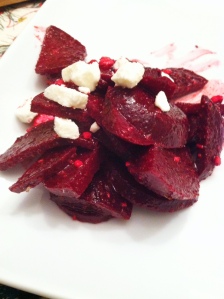
Roasted Beet Salad with Vinaigrette

Ingredients: Beets in vinaigrette

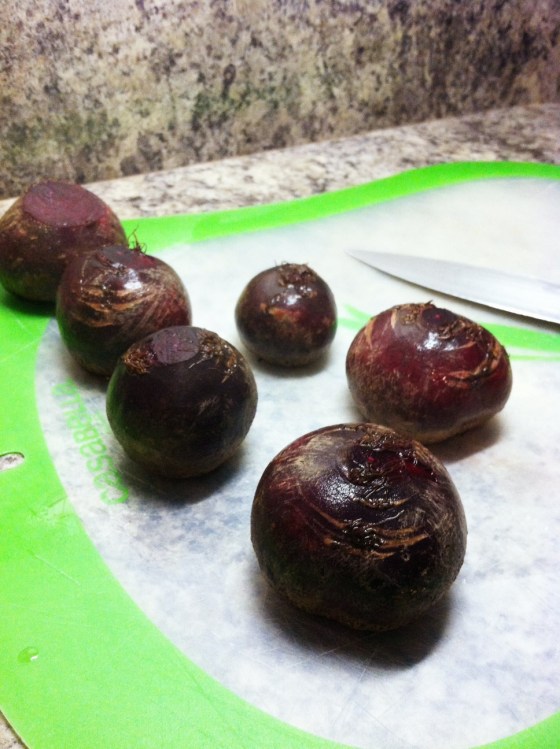
  • One bunch beets (as seen above)
  • 3 tbs olive oil
  • 1 tbs vinegar of your choice (balsamiq, red wine, champagne, whatever you like)
  • 1 shallot, finely diced
  • 1 tbs dried herbs (Italian, Herbs de Provence, fresh or powdered garlic or whatever else you’d like)
  • Salt and Pepper to taste
  • 1 cup crumbled feta cheese

Method:

  1. Pre-heat oven to 375 Fahrenheit. Cut the beets off their stems and trim off the tops and the “tails” of each beet. Clean each beet so they are free of dirt. Wrap each beet in individually in tin foil and place in the pre-heated oven, directly on the center rack. Roast for 30-40 minutes, or until each beet is easily pierced with a knife. 
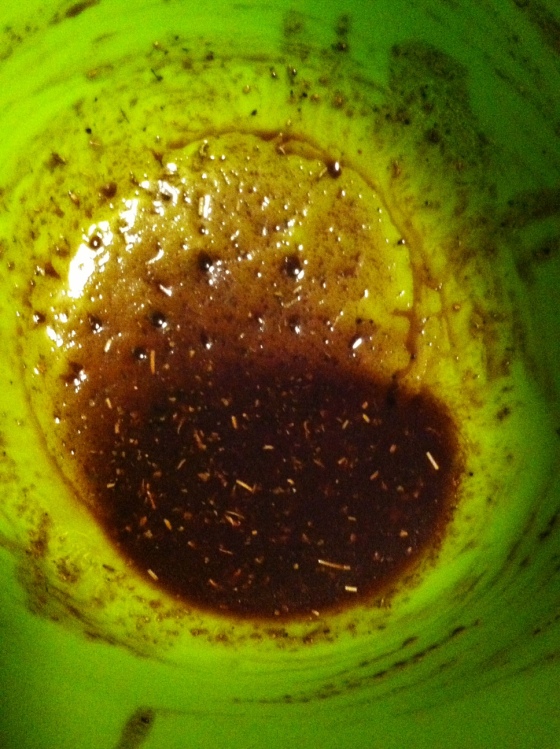
  2. While the beets are roasting, create your vinaigrette. The most important thing to remember here is the a vinaigrette dressing always 3 parts oil to 1 part vinegar. You can use any combination or any measurement (tsp, tbs, cup, etc), as long as you keep that ratio the same. Pour your oil, vinegar, shallots, herbs, salt and pepper into a medium sized bowl and whisk until they are emulsified. Set aside until beets have finished roasting.
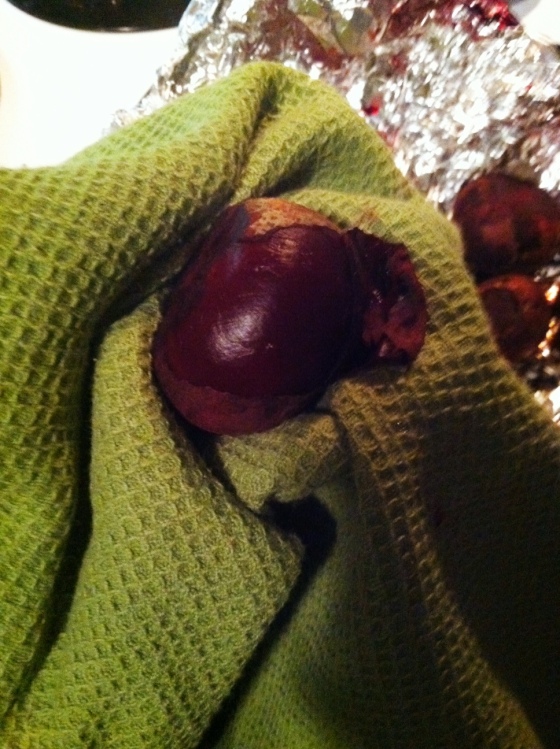
  3. When beets are easily pierced with a knife, unwrap from tinfoil and allow to cool. Take an old dishtowel and peel the beet’s skin off with the towel – if it’s roasted to completion, the skin should slide off easily. Do this with each beet.
  4. Cut each beet in half or in quarters, if large, and cut into thin slices. Re-whisk your vinaigrette so it is well blended, then add your beets to the bowl and toss to coat. Plate, then top each serving with a spoonful of feta cheese.
Trim and wash beets

Trim and wash beets

A well emulsified vinaigrette

A well emulsified vinaigrette

Beets

After roasting, remove skin with a dish towel

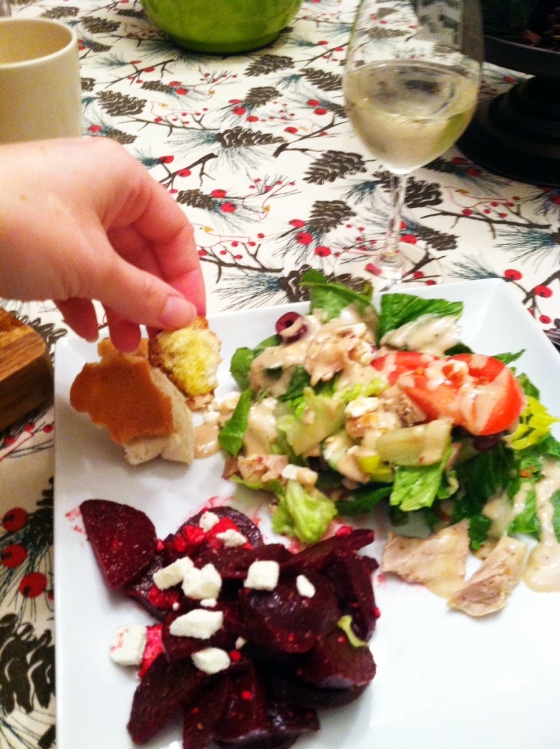
Served with Greek salad, crusty French bread a Pinot Grigio.

Served with Greek salad, crusty French bread a Pinot Grigio.

If you don’t like beets like this, then I grant you the right to dislike beets. But before you file them away in things that are gross and that you refuse to eat, please try this recipe. Please. Give beets a chance.

Note: these beets were purchased from Westside Produce and Provisions where they were sourced from New Earth Farms in the Pungo area of Virginia Beach, where they use sustainable and organic growing methods. 

Shop Locally

I write a monthly column for a local publication called Tidewater Women called “What’s in Season” (you can see all my other publications and press on my MORE BEETS page). The column usually just reviews whatever local produce is around that month, where you can get it and then a few recipes on what to do with it. But for December, I was inspired to write something more . . . well, inspired. More like my holiday mantra, if you will. The column is below, in it’s entirety and can be found in its original form on the Tidewater Women Website.

Shop Locally

The holidays are upon us, and there is no escaping them. As I contemplate what I love about the holidays, I must confess that shopping is not one of my favorite things. It isn’t that I hate giving people things or that I’m not generous. It’s just that the materialism of the whole thing really weighs me down. After my 15th trip to Target or my 5th Amazon order of the season, shopping just starts to feel meaningless. What is this stuff? Does the person I’m buying for need it? Where did my money just go? What multinational, billion-dollar corporation did I just stuff the pockets of?

I know I’m not the only person looking for a more meaningful way of giving, and so I offer up a solution: shop local. There are several reasons to shop local this season. The gifts are more likely to be unique or one-of-a-kind. Shopping local helps support your local economy. It helps support an artisan, farmer, producer, or craftsman, therefore ensuring that these members of our community have a better holiday season. Finally, the gifts will seem thoughtful and creative.

My 30+ person extended family does a Pollyanna-style gift exchange every Christmas, and last year the gift I contributed was a locally themed basket of goodies, which included goat’s milk soap, locally produced wine, jam, peanuts, and other items representative of Hampton Roads. My cousin Sara ended up getting the basket, and I told her if she didn’t like it, I would switch gifts with her. To my delight she loved it! She even texted me a few months later when her soap ran out, asking where she could buy more. She appreciated the thought, creativity, and uniqueness of the gift. She didn’t mind that it wasn’t the latest and greatest piece of technology or a gift card to her favorite store or that it didn’t hold the highest dollar value. The basket of locally sourced gifts meant way more than that because it represented a half a dozen family-owned companies or producers, all being supported by my local purchases.

Here are some great ways to shop local this season. Many farmers markets are holding special holiday markets including Old Beach Farmers Market on 19th street at the Oceanfront in the Croc’s parking lot, which will have a holiday market on December 15. Additionally the Portsmouth City Farmers Market will be open every Saturday through December 22, the Smithfield Farmers Market will be open for holiday markets on December 1 and 15, and the Virginia Beach Farmers Market on Dam Neck Road is open every day, year round.

Several retail outlets also carry locally produced items, such as Heritage Natural Market on Laskin Road, Westside Produce & Provisions on Colley Avenue, and any of Taste Unlimited’s six locations. You can also sign up for Coastal Farms Co-op, which sources products from over 50 area farms and producers and uses an online ordering system with weekly drop-offs all over Hampton Roads. A co-op membership or CSA subscription would also make a great gift for the person who has everything. And while there is not a lot of variety in fresh produce at the moment, there are still wonderful local food items that make great gifts—like fresh baked bread, homemade dried herb seasoning, jams and jellies, salsas, cheese, honey, peanuts, wine, and more.

So this holiday, skip the long lines at the store and start a shop-local revolution! The person on the receiving end of your gift is sure to be delightfully surprised and possibly inspired to support, shop, and give local themselves next year.
For more information on the markets and businesses listed above, visitwww.buylocalhamptonroads.org

Rachel Burns
 is the director of Buy Fresh Buy Local Hampton Roads. Visit 
www.buylocalhamptonroads.orgwww.facebook.com/buylocalhr, and www.twitter.com/buylocalhr.

Slow Cooker BBQ

I’m from North Carolina so naturally I am a huge fan of Barbecue. And while you can’t beat hardwood smoked whole hog, for most of us that is not an option in our own kitchens (although I am still trying to convince Jeremy that there is room beside the hot tub in the backyard for a full-hog sized smoker).  But there is another option and it comes in the somewhat unexpected form of a slow cooker. Yea, there are some hard-core BBQ fans out there that will tell you that if it’s not cooked over a real hard wood fire then it’s not technically barbecue, and on some historical points I will agree with them, but for all intents and purposes this recipe gets the job done. But make no mistake – while you don’t have to cook a whole hog in a split metal garbage pail over a hickory fire, you do have to commit yourself to two days of cooking, although most of it is pretty hands-off. You also have to commit yourself to your house smelling like pork for two days. Something I do not mind at all, but which some of you may find displeasing.

Step 1: Purchase a pork shoulder. These are also often called pork picnics, or pork butts. I usually go for a 3-4 pounder because I’m not looking to cook for a huge crowd. Go bigger if you need to, just make sure it will still fit inside your slow cooker.

Step 2: The night before you want to eat the Q, put the shoulder into the crock pot with at least a liter of cola or as much as you need to just about cover it. You can use any kind of cola. I used Dr. Pepper, but I’ve also used R C Cola, Coke, Pepsi, whatever. Turn the cooker on low and let it sit overnight.

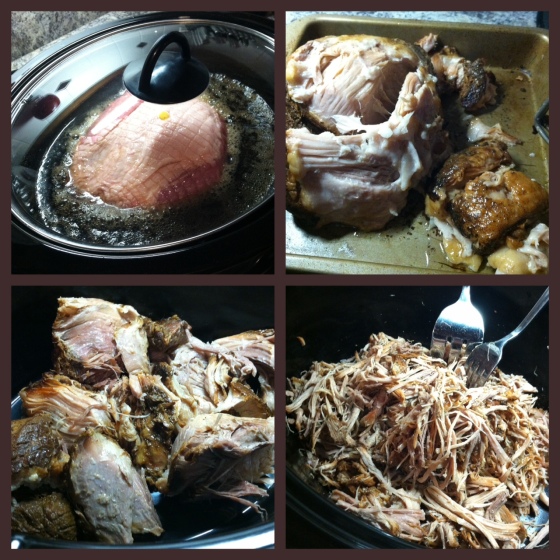
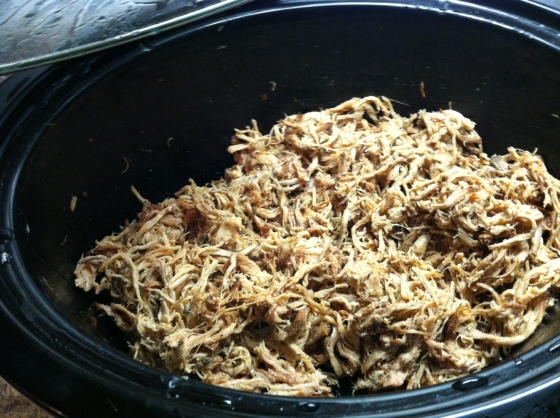
Step 3: In the morning, remove the pork from the cola, pour the cola out and wipe out your slow cooker crock. The pork will be falling apart, so make sure you get all the meat out before you toss the cola (IE- don’t throw the pork baby out with the bath water). Let the pork cool for a bit, then begin to remove as much of the fat as you can from the meat. This will require tearing the meat into large chunks. (See photo collage, upper right hand corner). Once you’ve gotten as much fat off as possible (and bones if you’ve purchased a bone-in shoulder), put the meat back into the crock pot and shred with two forks until you’ve reached the consistency and chunkiness you like. You can also chop the meat after it’s shredded if you like that texture better. Chopped vs. Pulled is a completely personal preference; the value of one over the other I will not weigh in on although many people have strong opinions here.

BBQ Collage

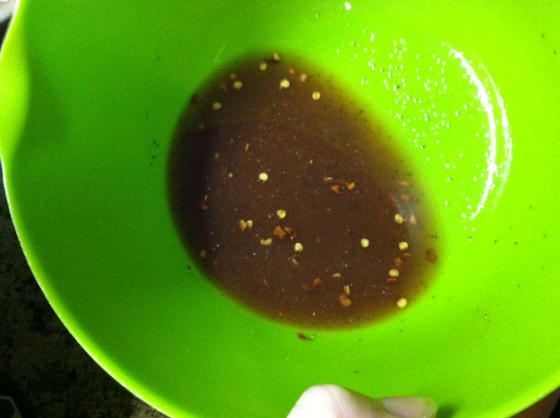
Step 4: Make your sauce. This is where personal preferences turn into regional BBQ wars. You are certainly welcome to go to the store, buy a pre-made jar of BBQ sauce and dump it onto your meat at this point. That is totally fine if you have a particular brand that you really enjoy. However, I have never ever ever purchased a sauce from the store that adequately represented real Eastern Carolina BBQ Sauce, so I make my own. I cannot even begin to give you real measurements of anything, but I will tell you it includes a little to a lot of the following things: apple cider vinegar, molasses, red pepper, black pepper, hot sauce, salt, garlic and onion powder, ketchup, and (secret ingredient alert!) liquid smoke. Yup. If you can’t cook it over real smoke and enjoy that hard-charred meat bark, liquid smoke will at least give you a hint of that flavor. The sauce I make looks something like this when I’m done:

Eastern Carolina BBQ Sauce

Secret Sauce

Possibly not at all like the BBQ sauce you know and love. Again, this is very regional. If you love some KC Masterpiece, I’m not judging (yes I am), just use that instead and sauce it to your liking. It should look something like this, or like something completely different if you’re using a different kind of sauce:

NC Style BBQ

This is what Eastern NC sauced BBQ looks like.

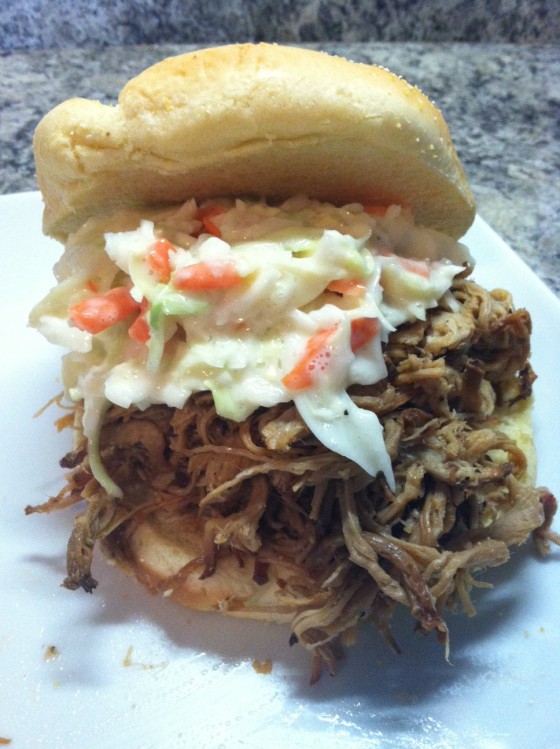
Step 5: Leave the meat in the crock pot with the sauce on low during the day. When you’re ready for dinner, check the meat, see if it needs any more sauce, then serve how you like. Again, this could be a multitude of ways, but I see no reason why you wouldn’t want it on a soft bun with home made coleslaw and a good dose of hot sauce:

BBQ Sandwich

Heaven.

I’ve taken this BBQ to several events and never get less than a dozen compliments on it. Even though it takes a good 20 hours, it’s worth it, and really is very very easy when you break it down. And the more you make it, the better you’ll learn how you like your sauce, or you’ll come up with other fun combinations. I’ve seen a recipe done like this but instead of BBQ sauce, a Cuban marinade was used, then the pork was made into Cuban sandwiches with ham and pickles and oh jeez, that’s going to have to be another blog . . .

What is your favorite kind of BBQ? Tennessee? Texas? Arkansas? Western NC? Let’s fight about it!

Turkey Day Re-cap

I hope everyone’s Thanksgiving was wonderful and beautiful and full of family and friends and good food. I thought I would give a quick re-cap of mine. Some of you may enjoy how this has almost nothing to do with food.

We started with brunch at my parents, several family members dropped in, which was nice, and then later my sister’s fiance brought out his Theremin for a little spooky jam session and it turns out that pug do NOT love Theremins.

This is WAY harder than he makes it look.


Pugs Hate Theremins. Proof:

Later that afternoon we headed over to my in-laws, where we had the full-blown traditional turkey day meal. But before that, we had to do some shooting (duh). Isn’t that what everyone’s family does on Thanksgiving?

I could have a whole other blog about zombie apocalypse preparation. I’m a good shot.

Then, the flying turkey!

Fly, turkey, fly!

This turned out better than the pictures makes it appear – the bird landed safely onto the cutting board.

Needless to say there was a lot food, a lot of leftovers, and a lot of next-day dishes whipped up from those left overs, but I’ll spare you all the sharing of them, as I know by now most of you are as turkeyed out as I am. There is still half of a turkey pot-pie left, and I’m not sure I can even think about eating it. Who am I kidding? It was delicious and it’s for dinner tonight, along with some ham, stuffing, a turkey leg and some roasted acorn squash and apple casserole. Good gravy.

How was your Thanksgiving??


The one day of the year that everyone does what I want them to do

Thanksgiving gets the shaft and we all know it. Here is how the second half of the year’s calendar works:

September – Labor Day, back to school
October – Halloween
November, December, Most of January – out of control consumerism in the guise of a religious holiday we all know as CHRISTMAS

It doesn’t leave much room for a little altruistic holiday like Thanksgiving that focuses on being grateful for what we have instead of insistent that we get all the things the TV told us we need. Which is why I try my best to be a Thanksgiving cheerleader. It is, after all, the one day of the year that everyone collectively does this thing that I am constantly trying to convince people to do: get into your kitchen, cook a meal for people you love that is inspired by seasonal produce, then sit down at a table together and eat it slowly. Then, of course, the next day is the one day of the year where everyone does the one thing that actually makes me want to not be a part of the human race. The contrast between Thanksgiving and Black Friday could have been the socioeconomic topics of one of  George Orwell’s books had he lived long enough to see the monstrosity that is the biggest retail holiday of the year. Don’t get me wrong, I’m a free-market capitalist as much as the next gun-toting Libertarian, but there’s a right way and a wrong way to support the economy and we all vote with our dollars whether we vote for massive corporations who export jobs and manufacturing to China or whether we vote for small, locally-owned companies whose owners create jobs and reinvest those dollars back into our community . . . . but I digress.

THANKSGIVING!!

An Edible Arrangement, indeed.

Whether or not the traditional Thanksgiving story is true, and whether or not the things we eat each year really represent a traditional early-American harvest, the bottom line is that the meal is still a celebration of bounty, inspired by the local, the seasonal, the gracious things in life. And I love it. My personal family traditions have changed over the years. As a kid, our entire 30+ person extended family would all come to my parents’ house for Thanksgiving, so it was always a really big deal. We would get up early in the morning to help my mom set the house up for the influx of people, and then as the sun went down, people would start pouring in, and the whole evening was just complete bliss for me. I love my family so much and even though most of us lived next door to each other on the same dirt road, it was somewhat rare that we are all in one place at one time, so for me, it was like this amazing Thanksgiving miracle. And everyone could cook so damn good. There were usually at least 20 dishes spread out around the kitchen, everything from corn pudding to collards to stewed tomatoes (this is the south, after all) and of course the traditional turkey, ham, green bean casserole, mashed potatoes, etc.

As we’ve all grown up, the grandkids have gotten married and it’s harder to get everyone together at the same time, and so traditions have changed, and Jeremy and I usually spend every other Thanksgiving with his family in Ohio, which I also love and which includes a very different list of dishes like Galumpkis, Kielbasa and Pierogies (are you sensing that someone is Polish?) But the day itself and the meal is always the same: full of love and tradition and thankfulness and I am a complete sucker for that.

So in the spirit of Thanksgiving and with those big family dinners playing out in my mind, I share with you a recipe for genuine southern collard-greens (pronounced ‘collargreens’, no d, all one word). Please understand, though, that cooking up a mess of greens requires a tiny bit of know how and personal preference. This recipe is more of a guide. As you cook them more and more, you’ll figure out exactly how you like them.

Simply Southern Collard Greens

Serves 10, approximately

Ingredients:

  • 2 large bunch of collards, fresh and local if possible and cut directly at the base of the stem (pictures at right)

    If possible, get collards from the market or farm cut right at the base of the plant.

  • 1lb of bacon, fat back, ham, jowls, ham hock or any other kind of seasoning meat
  • 1/2 of a medium onion, diced
  • 2 garlic cloves, minced
  • 1/2 c. apple cider vinegar, plus more for serving
  • 1/2 tsp. baking soda
  • salt and pepper to taste
  • jalapenos (fresh or pickled) – *optional and to taste – no more than one whole jalapeno *
  • water, on hand

Method:

  1. Thoroughly rinse each individual leaf off the collard plant and then tear the thick rib/stem off each leaf.
  2. Roll leaves together like a cigar, then cut crosswise into strips. Do this with all the collard leaves.
  3. If you’re using any uncooked meat (such as bacon) but it in the bottom of a large, heavy stock pot and cook it over medium heat. Once it starts to release its fat, throw in the onions and garlic and saute it all together until cooked through
  4. Pour in the apple cider and use this to deglaze the bottom of your pot – scraping up the bacon and onion bits with a wooden spoon, let this reduce together for a few minutes
  5. Begin adding your strips of collards, one large handful at a time, to the vinegar/pork fat glaze (that sounds awesome, right?) and stir them in, letting them wilt before adding another handful
  6. Stir in the baking soda and pepper to taste (and jalapenos if you’ve chosen to do that) and begin adding water as needed (This is where the know-how and experience comes in. You don’t want them too soggy, but you don’t want them to burn. They’re just sort of stewing in the water bath, so add it as you need, but not too much). Really taste the collards before adding salt – the meat you’ve used generally makes them salty enough.
  7. At this point, you can continue to let them simmer and cook on low on the stove top, or you can transfer them to a crock pot and leave them on low for a few hours, or you could even just continue to cook the water down in small amounts in your pot , doing a braising method that would results in less “soggy” greens. It’s totally up to you, I’ve done it every which way, depending on what I want and how much time I have. If you’re braising them, just keep stirring in water every 10 minutes or so and stirring the greens until they are done to your liking (30 minutes or so?). Otherwise, simmer or slow cook for 3-4 hours on low, for very Southern style greens.
  8. Serve warm with more cider vinegar or pepper vinegar, salt and pepper.

Collardy Goodness

What are your favorite Thanksgiving dishes? What can you not live without eating on the big day?

Eggy Eggy Parm Parm

For you Tom Haverford fans out there . . .


ANYways. I’m a horrible blogger. Two weeks in between posts? Blogging suicide. But I have an excuse. The days/weeks/months have been FLYING by lately, have they not? I’m not sure if it’s because of the election and how much of the past several months I’ve had to just tune out and hum songs in my head while I consider moving out of a swing state to Texas before the next major election, or if it’s about daylight savings time and so the days just seem shorter, or if it’s just that ramp up to the holidays where we all sort of run around like chickens about to get their heads cut off, but in any case, the time between my blogs feels like hours. The last one was right before Halloween, which was like, yesterday, right?

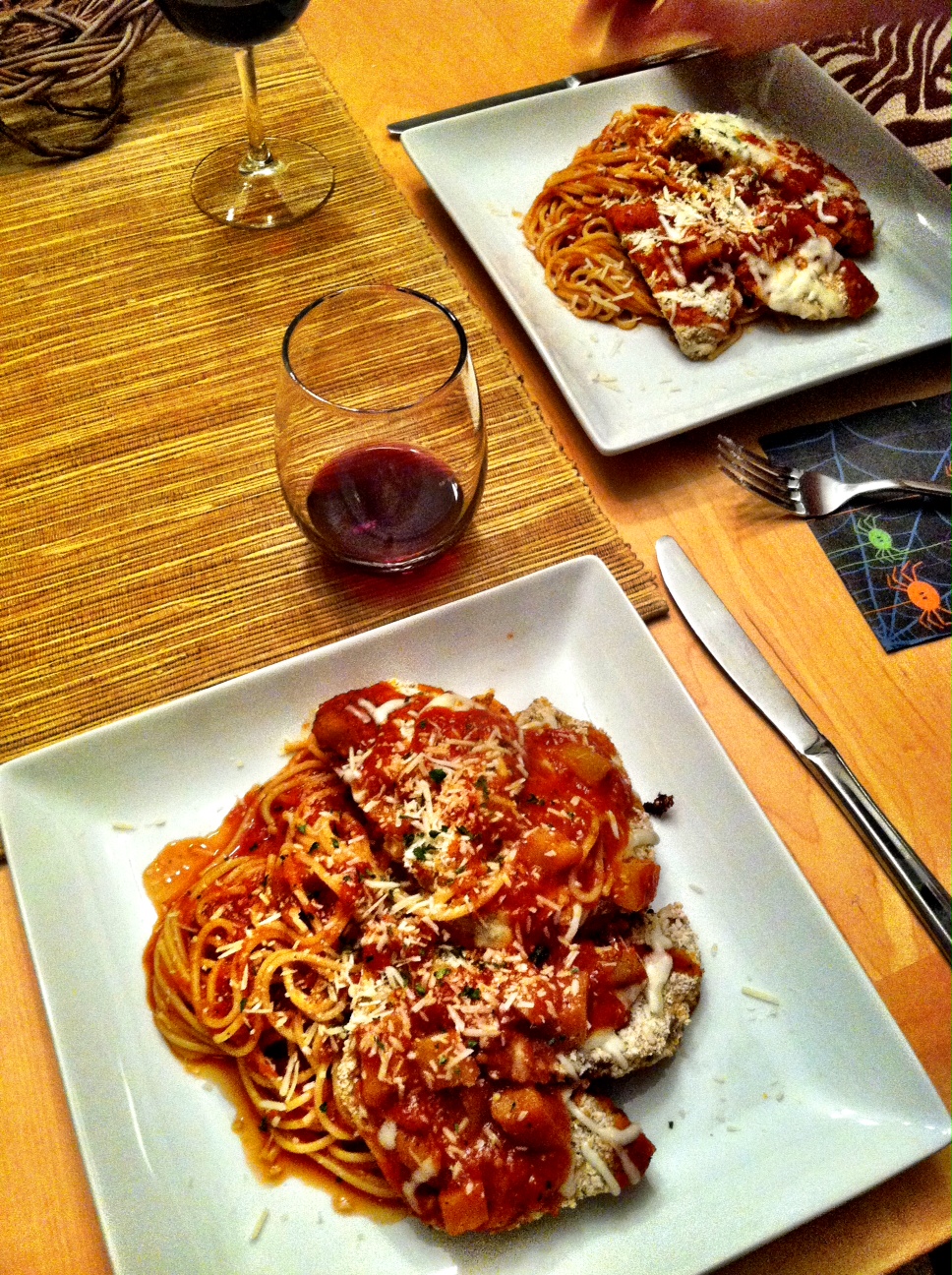
In any case, I present to you: eggy eggy parm parm (aka Eggplant Parmesan):

Eggy Eggy Parm Parm

This is a super fun joke for you Parks and Rec fans. For everyone else I just sound a little spastic.

This meal came together in some fun ways. The sauce is my tomato sauce I’ve posted about twice, and now thrice, cause I’m obviously obsessed with it. And the eggplant came from Mattawoman Creek Farms on the Eastern Shore of Virginia. Last weekend the organization that I direct, Buy Fresh Buy Local  Hampton Roads, helped organize a local food tour on the Eastern Shore. Several farms, restaurants and wineries participated and opened their doors to the public, gave free wine tastings and specials, etc. I’ve been up the shore a few times in my life, but never to spend any real, good quality time, so I was excited to spend the day up there. We took the dogs with us, and they even got a behind-the-scenes tour of Mattawoman Creek Farms, a beautiful and incredibly well run Organic Farm that produces what I think is probably world-famous lettuce, among lots of other things. They have an incredibly long season because they use green and hoop houses very efficiently. I’m really sorry I didn’t take any pictures there, but I was wrangling two dogs in a muddy field just a few days after hurricane Sandy blew through.

We also visited two wineries, Holly Grove Vineyard and Chatham Vineyard. They are both really great and we bought a bottle of Petit Verdot at Holly Grove and the Church Creek Chardonnay at Chatham. Also, they have winery dogs, so you can’t hate that:

Anyways, back to the parm. We didn’t get a chance to go grocery shopping yesterday, so when I went to put dinner together a box of spaghetti, an eggplant and my frozen tomato sauce just made sense. As per usual, I do not really have a recipe for this, but I can tell you my process.

First, I peel the eggplant and cut it into 1” thick rounds. This was a huge eggplant, so I took two of the rounds and diced those pretty small to add to the sauce.

I took the rounds and dredged them in egg, then a breadcrumb/flour mixture and put them on a baking sheet. They went into a 350 degree oven for 20 -30 minutes or until they were easily pierced with a fork. Tender, but not mushy. About 2 minutes before they were ready to come out, I topped them with shredded mozzarella.

The diced eggplant pieces went into olive oil in a large pot and were sauteed with garlic and Italian seasoning until they were tender. Then the thawed tomato sauce went into the pot, maybe two cups? But use however much you need for however many people are eating. To this I add tomato paste to thicken the sauce. Remember, the sauce I make is more like tomato sauce in a can than pasta sauce in a jar, it’s the base for sauces, so it needs to be thickened in some way before putting on pasta. I let this simmer while the eggplant baked.

Cook your pasta according to the directions, drain, then mix into the tomato sauce to keep warm while the eggplant finishes up. Serve the eggplant over the pasta, top with Parmesan and parsley or a little more mozzarella. Do not eat this without wine. Preferably a cab sav, shiraz or chianti.

Yes, those are Halloween napkins. See, I really think Halloween was just yesterday.

I know this is not the traditional way to make eggplant parm, where you bake it with the sauce and big slices of mozzarella right on top and then served without pasta, but I’m not Italian, so there ya go. I also know I have posted a lot of eggplant related dishes. I just love it. People are scared of it, I’ve realized lately. They think it needs to be salted and rinsed and fussed over and that if you don’t do it just right it’s bitter or tough. I have never found any of this to be true. I don’t salt or sweat mine, I peel it, roast, bake or saute it, and I’ve never had one that tasted anything but delicious. And because I like to eliminate meat where I can in our diet, eggplant is the perfect substitution for chicken in this dish, or for sausage or ground beef in the sauce. It just makes the meal heartier while also making it healthier. I also like to use my method above of peeling, cutting and then breading the eggplant slices, then I put them on a baking sheet and freeze them. Then you can take out individual slices of eggplant straight from the freezer to the oven and bake them whenever you want them throughout the winter. I use them in this dish, or baked and put on a sub roll with marinara and provolone in place of meatballs or just as eggplant “filets” topped with bruchetta, cheese, olive tapenade – whatever you want!

How do you like to prepare eggplant? Are you scared of cooking with eggplant? What eggplant myths have you been told?

Impulse Buy

For most people, an impulse buy at the grocery store is a pack of gum, or maybe if you’re feeling really wild, a Milky Way (tm?) or something. Or if you’re at the farmers market, maybe you grab a little pint of blueberries, because you just can’t pass them up. But not for me. Oh no. When I impulse buy, I go big.

Take, for example, this past week when I went by Stoney’s Produce in Virginia Beach to see if they had kale or cabbage for a soup I was making. They did not. But you know what they did have? 25 pound boxes of canning tomatoes. That’s right. Instead of buying one bunch of kale for a soup, I came home with a toddler sized box of tomatoes. And they were on their last leg, which is why they were being sold in bulk. 25 pounds of tomatoes, over-ripe, bruised and needing to be turned into SOMETHING within a day or two. It was like buying a ticking time bomb. For $12.

For the tomato novices, you cannot leave tomatoes, especially tomatoes in this state, in a box all stacked on top of each other. They need to be laid out, stem side down, on a flat surface to keep from bruising any more. So you can imagine what 25 pounds of tomatoes, laid out in single rows looks like in my tiny kitchen. Well, you don’t have to imagine, actually, because I made a collage of the tomato invasion:

OH GOD THEY’RE EVERYWHERE!!

(that is only about half of them). I knew I wanted to eat some of them fresh and preserve some of them, so here’s what I did:


1. Caprese Salad

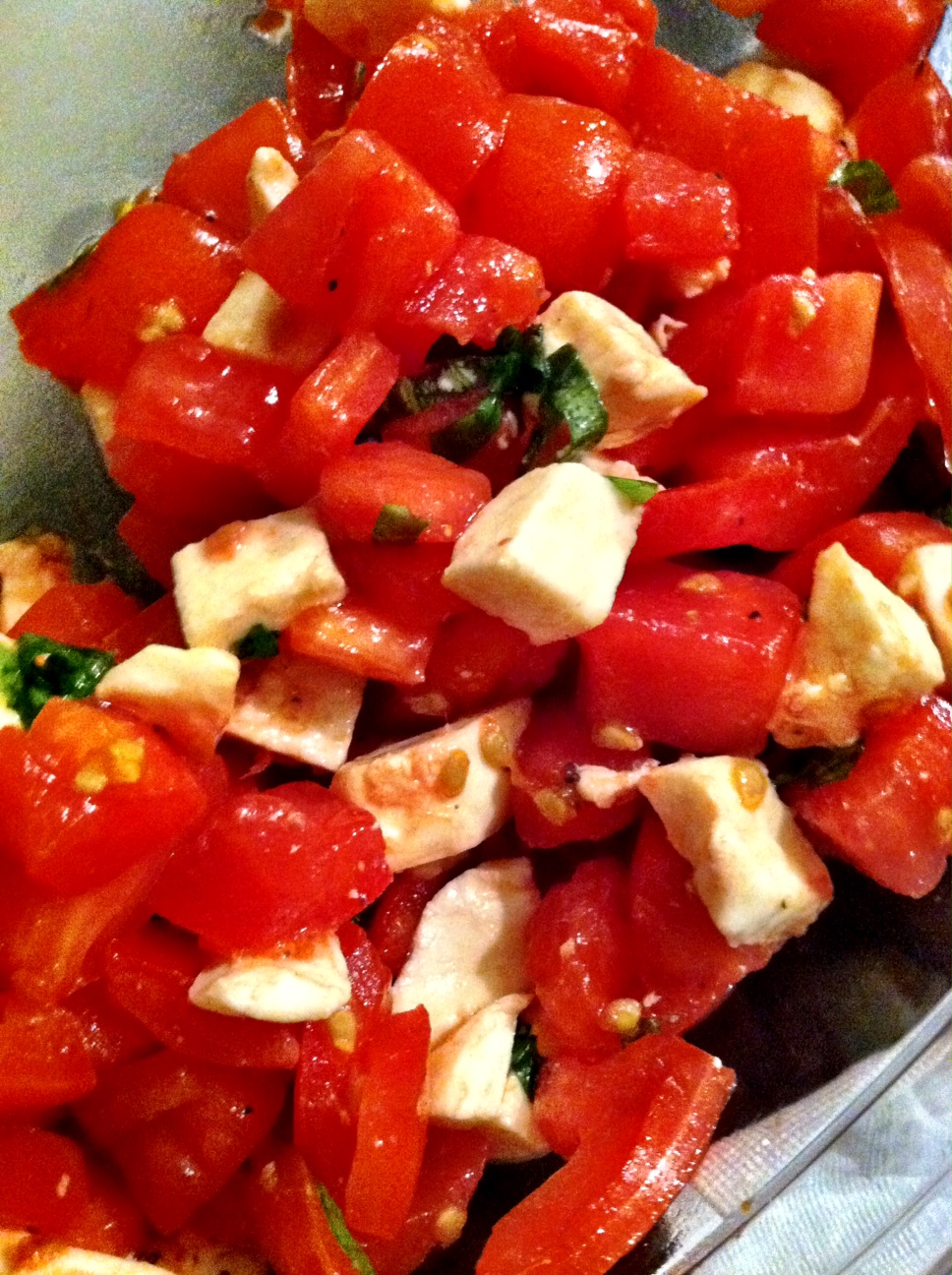
Some friends of ours invited us over for dinner this week, so I cut several tomatoes up, mixed them with diced fresh mozzarella, olive oil and fresh basil, salt and pepper and had it alongside some delicious chicken kebabs they made. Caprese is one of my very favorite tomato dishes, because it lets their freshness shine and creamy, slightly salty mozzarella is the perfect foil for them.

2. Salsa

I had not made and preserved any salsa yet this year, so this was the perfect opportunity. Some of this we ate fresh, the rest I will freeze and then thaw as needed throughout the winter. Recipe is super simple:

6 small tomatoes, blanched, peeled, diced
1 onion, diced small
2 jalapenos, seeded and diced (or keep some seeds in if you like the spice)
1 red pepper, roasted, peeled, seeded and diced
2 cloves of garlic, minced
1 tbs lime juice
salt and pepper to taste

Combine all your ingredients and let sit overnight for flavors to meld. Serve fresh with tortilla chips or freeze in zip top bags or tupperware containers. When you’re ready to use, let thaw in the refrigerator overnight. When you’re ready to eat the salsa, throw in some chopped cilantro, but I wouldn’t put the cilantro in with the batch you’re freezing. I think that sort of destroys the real fresh, bright scent and taste of cilantro. If you’re not sure how to roast a pepper, there are two ways to do it depending on what you’ve got going on. If you have a gas stove, then put a small burner on low, and sit the pepper directly on the metal over the flame, rotating every minute or so until every side of the pepper is black or bubbly. If you don’t have a gas stove, place the pepper directly on your oven rack right below your broiler. Again, rotate every minute or so until each side is burnt and bubbly. Then take the pepper (regardless of roasting method) and place in a heat proof dish with a lid. Steam will build up inside the container and after 10 minutes or so, you should be able to remove the skin from the pepper with your hands – it should just slide right off. Then cut the pepper open and remove the seeds, stem and pith, then dice into salsa-sized chunks. Easy Peasy – no reason to buy roasted red peppers for like $9 a jar at the grocery store.

3. Tomato Sauce

I’ve given this recipe before on the blog, but when I made this sauce this summer, it lasted for all of about 2 weeks, so it was definitely time to make a double batch and freeze it up again.

I also froze 9 tomatoes whole. Seriously – you can take an entire tomato – skin on and everything – and just stick it inside a freezer bag and throw it in the chill chest. Then take them out individually as you need them to make sauces. This only works for applications where the tomato texture doesn’t matter much (like the sauce above). It wouldn’t be great for salsas and things like that. I just had several tomatoes that really could not even wait the one day it took me to do these recipes, so I went ahead and froze them straight away to save them.

I still have about 6-7 tomatoes left, just waiting….to be something. Any suggestions??

How do you like them apples?

Apples are the iconic suggestion of autumn, there is no doubt. On a teacher’s desk on the first day of school, in an orchard, just waiting to be picked while leaves wisp around in the background, or baked into a warm brownie, topped with ice cream and homemade caramel…yeah, they’re pretty good.

As I’ve said 6,903 times, I hate to bake. But recently, my sister and her boyfriend Bryan (with a Y!) got engaged (!!), and so to celebrate, I invited them over for dinner, and of course – dessert. There is one thing in the world that will get me in the kitchen baking, and that is celebration. Cakes, brownies, pies – they all seem celebratory. Certainly nothing I would eat on an average Wednesday, anyways.

A quick trip to the farmers market yesterday morning left me with three pounds of apples, and a few ideas. But first off, let’s talk about this:

Eastern Apples: crispier, juicier, tastier

I mean, I love a local apple as much as the next Virginian, but dagg on, if this bag isn’t just trying to slap Washington in the face . . .

Anyways, I had been reading my November issue of Martha Stewart Living that morning, and had noticed in the back, without much regale, a little recipe for apple brownies. And brownies are like baking for idiots. Perfect. I had everything I needed on hand, now that I had apple poundage, so I got started. Here’s the recipe, taken directly and without edit, from the MSL website.

Apple Brownies

Ingredients

  • 1 stick salted butter, melted and cooled, plus more for dish
  • 1 cup all-purpose flour
  • 1 teaspoon ground cinnamon
  • 1/2 teaspoon baking powder
  • 1/2 teaspoon salt
  • 1/4 teaspoon baking soda
  • 1 cup sugar
  • 1 large egg
  • 1/2 cup chopped walnuts
  • 2 large firm-sweet apples (about 1 pound total), peeled, cored, and cut into 1/2-inch cubes (2 3/4 cups)

Directions

  1. Preheat oven to 350 degrees with rack in center position. Generously butter an 8-by-11-inch baking dish.
  2. Whisk together flour, cinnamon, baking powder, salt, and baking soda in a medium bowl. In a separate bowl, beat together butter, sugar, and egg with a mixer until pale, about 2 minutes. Add walnuts and apples, and stir by hand until combined. Add flour mixture, and stir until combined, about 30 seconds more.
  3. Spread batter in pan, and bake until golden brown and slightly firm, about 40 minutes. Let cool on a wire rack 30 minutes, then cut into 12 bars.

Cook’s Note

Bars can be stored in an airtight container up to 5 days.

I used one Gala apple and one Johnagold, just to mix it up. I also used half stevia and half raw, organic sugar to reduce some calories, as if it mattered at that point. And if you’re not into eating brownies (because you’re an inhuman, soul-less, communist serial killer? I mean, really, who doesn’t like brownies?) then make this recipe purely for the way it makes your house smell for several hours.

You have to wait until they cool to cut them up. You can do it.

I served them with homemade caramel sauce (also super easy to make), and vanilla ice cream, or frozen yogurt – we’re not sure. The labeling on the carton was very confusing. I also whipped up some spiked hot apple ciders with a splash of the caramel sauce to go with the brownies. Home run.

The one thing I will note, if you make this recipe, the batter looks like nothing but apples, and if you’re a baking amateur, like me, then you may freak out that they are going to be no brownie and all apple, but somehow it works itself out.

How DO you like them apples??

What are your favorite fall-inspired apple recipes? Do you go apple picking? What’s your favorite kind of apple (mine’s the sun!)?