New Year: Two Ways

If you’re from the North, Midwest or you’re Polish or German then for you New Years probably means sauerkraut and pork, for good luck. If you’re from the south, it’s “hopping johnnies” or black eyed peas. Other parts of the country and world eat grapes, fish or special cakes to bring luck and prosperity for the new year.  Since Jeremy’s background is Midwestern German and Polish and my background is ….. southern, it’s always a toss up about what to eat each new year, so this year we did both. Obviously.

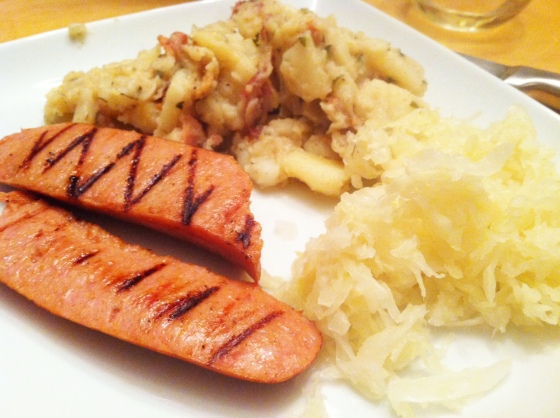
On new year’s eve, before we headed out for a fun night with friends, I grilled up some kielbasa, made a traditional German Potato Salad and served it all with Amish-made sauerkraut and spicy brown mustard. This is the kind of food I didn’t even know about as a kid, and I’m so glad I’ve been introduced to it through Jeremy and his family. That potato salad is on point – click above for the recipe.

Na zda-ró-vye!

Na zda-ró-vye!

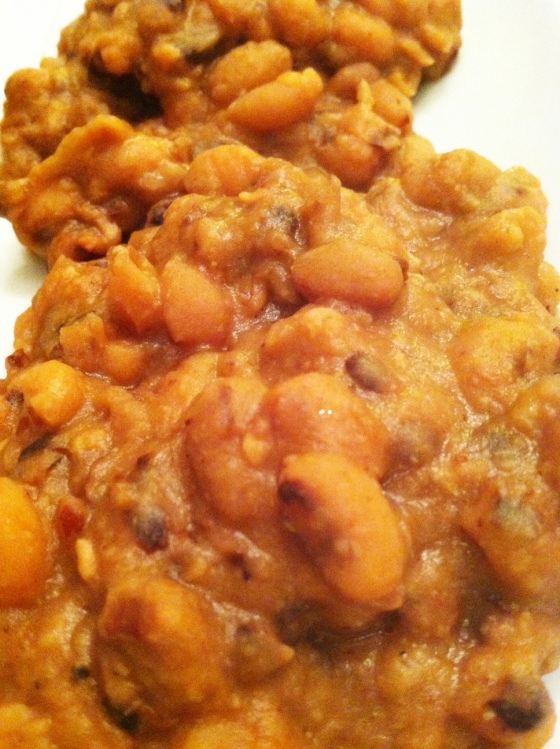
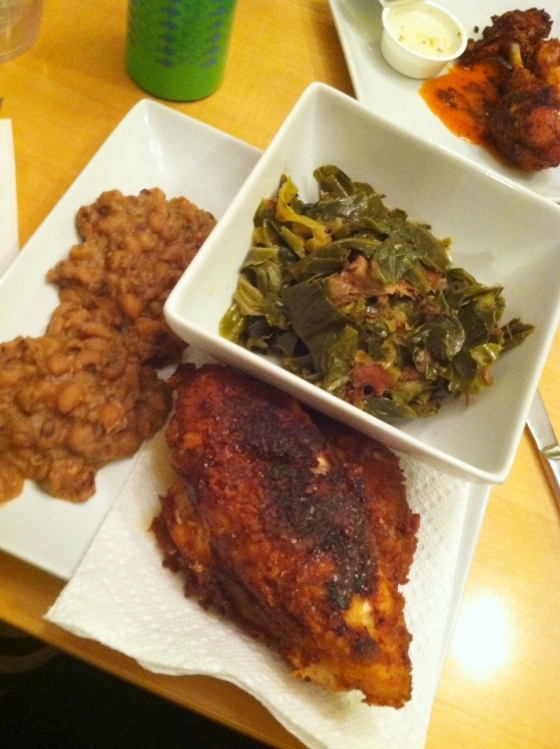
Then on New Years day, we had Alton Brown’s Skillet Fried Chicken with black eyed peas and collard greens. This year I made my black eyed peas in the slow cooker, which eliminated any soaking time you would normally need to make dried beans. All I did was sort and rinse 1 lb of beans, throw them into the slow cooker with 6 cups of water and my seasoning and let them cook on low for 8 hours (or high for 4). I cooked up some bacon, onion, and garlic, which I added to the cooker along with a healthy dose of pepper. They were great this way and so much easier. I wish black eyed peas were prettier in pictures, but they’re just not. Oh well, they are still delicious.

not pretty, but tasty.

not pretty, but tasty.

This has "lucky" written all over it.

This has “lucky” written all over it.

I hope you all had a safe and wonderful new year’s, and I’m looking forward to sharing more recipes, tips, and total failures with you in 2013. Happy It’s Not the Holidays Anymore!!!

What are your new year traditions? What foods do you hope will make you lucky and prosperous?

The root of it all

I just gave myself an award for the most clever blog title ever.

i ❤ beets

It is a shame, I realized, that this blog’s namesake has never really been examined thoroughly. I think in my very first blog post I may have posted a picture of a beet dish I had done, but I’ve never really delved into this amazing little root that inspired me to make this blog. There are a few reasons that beets are the thing I happen to heart. They are available locally, they are available at several times throughout the year and many people don’t like them. Why is that a reason to make beets the central theme of a blog? Because I think I can change people’s minds. I think a lot of foods out there that deserve our attention but suffer general distaste have just been presented wrong all this time. Like the poor Brussels sprout, which I will post about later . . .

Take, for instance, my husband who insisted he hated beets. So I asked in what format he had experienced beets in the past and he said either canned, pickled or boiled to death. Well, no wonder. He also hated Brussels sprouts for similar reasons. But there is a simple answer to both of these food fears and it is this: roasting. Roasting, which uses dry, indirect and diffused heat (such as an oven) increases flavor by caramelization and the Maillard browning reaction. Essentially, roasting enhances the sugars in foods through a process called pyrolysis, which I will not get into, because I barely passed chemistry. But here is what I do know: it makes food delicious. Especially foods like beets, which already have a high natural sugar content, just waiting to be released.

Beets are also so nutritious. Here are some facts from Nutrition and You about beets:

  • Beets are a rich source of phytochemical compound, glycine betaine. Betaine has the  property of lowering homocysteine levels within the blood. Homocysteine, a highly toxic metabolite, promotes platelet clot as well as atherosclerotic-plaque formation, which, otherwise, can be harmful to blood vessels. High levels of homocysteine in the blood result in the development of coronary heart disease (CHD), stroke and peripheral vascular diseases.
  • They are also a rich source of B-complex vitamins such as niacin (B-3), pantothenic acid (B-5), pyridoxine (B-6) and minerals such as iron, manganese, copper, and magnesium.
  • The root has very good levels of potassium. 100 g fresh root has 325 mg of potassium or 7% of daily requirements. Potassium lowers heart rate and regulates metabolism inside the cells by countering detrimental effects of sodium.

And while us die-hard beet fans can eat a beet canned, pickled, boiled, grilled or anything else, for those skeptics out here, this is my GO-TO beet recipe. I’m not sure where it originated from…I think a friend may have suggested this method and I’ve just sort of made it my own over time, I’m not really sure. My hope is that you will love it enough to make it your own, adding, subtracting and substituting to your liking.

Roasted Beet Salad with Vinaigrette

Ingredients: Beets in vinaigrette

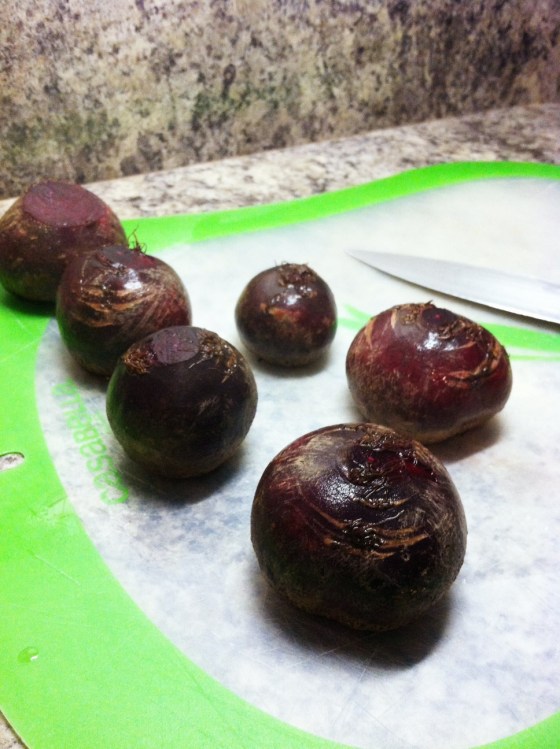
  • One bunch beets (as seen above)
  • 3 tbs olive oil
  • 1 tbs vinegar of your choice (balsamiq, red wine, champagne, whatever you like)
  • 1 shallot, finely diced
  • 1 tbs dried herbs (Italian, Herbs de Provence, fresh or powdered garlic or whatever else you’d like)
  • Salt and Pepper to taste
  • 1 cup crumbled feta cheese

Method:

  1. Pre-heat oven to 375 Fahrenheit. Cut the beets off their stems and trim off the tops and the “tails” of each beet. Clean each beet so they are free of dirt. Wrap each beet in individually in tin foil and place in the pre-heated oven, directly on the center rack. Roast for 30-40 minutes, or until each beet is easily pierced with a knife. 
  2. While the beets are roasting, create your vinaigrette. The most important thing to remember here is the a vinaigrette dressing always 3 parts oil to 1 part vinegar. You can use any combination or any measurement (tsp, tbs, cup, etc), as long as you keep that ratio the same. Pour your oil, vinegar, shallots, herbs, salt and pepper into a medium sized bowl and whisk until they are emulsified. Set aside until beets have finished roasting.
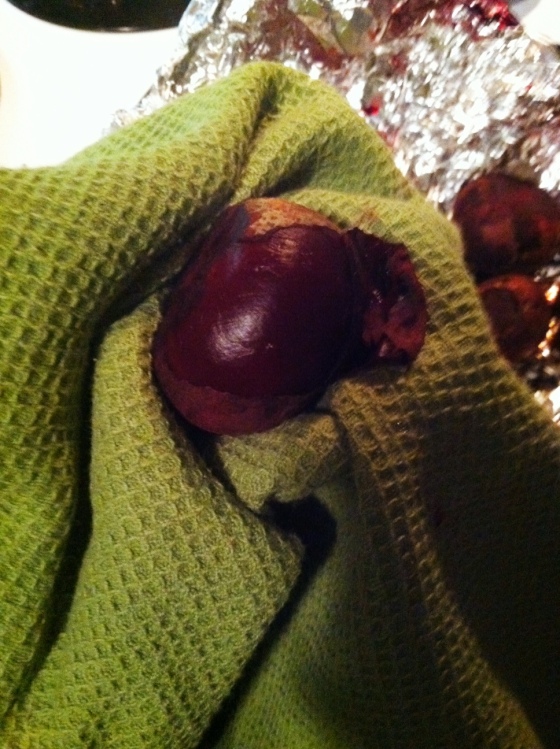
  3. When beets are easily pierced with a knife, unwrap from tinfoil and allow to cool. Take an old dishtowel and peel the beet’s skin off with the towel – if it’s roasted to completion, the skin should slide off easily. Do this with each beet.
  4. Cut each beet in half or in quarters, if large, and cut into thin slices. Re-whisk your vinaigrette so it is well blended, then add your beets to the bowl and toss to coat. Plate, then top each serving with a spoonful of feta cheese.
Trim and wash beets

Trim and wash beets

A well emulsified vinaigrette

A well emulsified vinaigrette

Beets

After roasting, remove skin with a dish towel

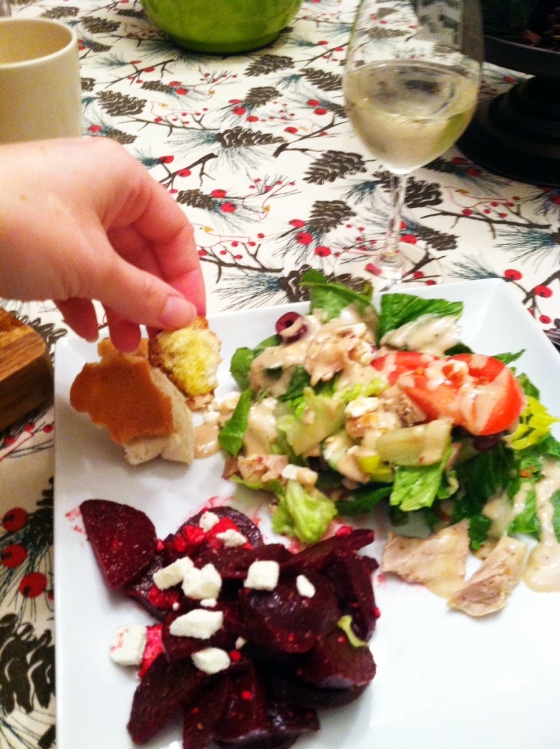
Served with Greek salad, crusty French bread a Pinot Grigio.

Served with Greek salad, crusty French bread a Pinot Grigio.

If you don’t like beets like this, then I grant you the right to dislike beets. But before you file them away in things that are gross and that you refuse to eat, please try this recipe. Please. Give beets a chance.

Note: these beets were purchased from Westside Produce and Provisions where they were sourced from New Earth Farms in the Pungo area of Virginia Beach, where they use sustainable and organic growing methods. 

Shop Locally

I write a monthly column for a local publication called Tidewater Women called “What’s in Season” (you can see all my other publications and press on my MORE BEETS page). The column usually just reviews whatever local produce is around that month, where you can get it and then a few recipes on what to do with it. But for December, I was inspired to write something more . . . well, inspired. More like my holiday mantra, if you will. The column is below, in it’s entirety and can be found in its original form on the Tidewater Women Website.

Shop Locally

The holidays are upon us, and there is no escaping them. As I contemplate what I love about the holidays, I must confess that shopping is not one of my favorite things. It isn’t that I hate giving people things or that I’m not generous. It’s just that the materialism of the whole thing really weighs me down. After my 15th trip to Target or my 5th Amazon order of the season, shopping just starts to feel meaningless. What is this stuff? Does the person I’m buying for need it? Where did my money just go? What multinational, billion-dollar corporation did I just stuff the pockets of?

I know I’m not the only person looking for a more meaningful way of giving, and so I offer up a solution: shop local. There are several reasons to shop local this season. The gifts are more likely to be unique or one-of-a-kind. Shopping local helps support your local economy. It helps support an artisan, farmer, producer, or craftsman, therefore ensuring that these members of our community have a better holiday season. Finally, the gifts will seem thoughtful and creative.

My 30+ person extended family does a Pollyanna-style gift exchange every Christmas, and last year the gift I contributed was a locally themed basket of goodies, which included goat’s milk soap, locally produced wine, jam, peanuts, and other items representative of Hampton Roads. My cousin Sara ended up getting the basket, and I told her if she didn’t like it, I would switch gifts with her. To my delight she loved it! She even texted me a few months later when her soap ran out, asking where she could buy more. She appreciated the thought, creativity, and uniqueness of the gift. She didn’t mind that it wasn’t the latest and greatest piece of technology or a gift card to her favorite store or that it didn’t hold the highest dollar value. The basket of locally sourced gifts meant way more than that because it represented a half a dozen family-owned companies or producers, all being supported by my local purchases.

Here are some great ways to shop local this season. Many farmers markets are holding special holiday markets including Old Beach Farmers Market on 19th street at the Oceanfront in the Croc’s parking lot, which will have a holiday market on December 15. Additionally the Portsmouth City Farmers Market will be open every Saturday through December 22, the Smithfield Farmers Market will be open for holiday markets on December 1 and 15, and the Virginia Beach Farmers Market on Dam Neck Road is open every day, year round.

Several retail outlets also carry locally produced items, such as Heritage Natural Market on Laskin Road, Westside Produce & Provisions on Colley Avenue, and any of Taste Unlimited’s six locations. You can also sign up for Coastal Farms Co-op, which sources products from over 50 area farms and producers and uses an online ordering system with weekly drop-offs all over Hampton Roads. A co-op membership or CSA subscription would also make a great gift for the person who has everything. And while there is not a lot of variety in fresh produce at the moment, there are still wonderful local food items that make great gifts—like fresh baked bread, homemade dried herb seasoning, jams and jellies, salsas, cheese, honey, peanuts, wine, and more.

So this holiday, skip the long lines at the store and start a shop-local revolution! The person on the receiving end of your gift is sure to be delightfully surprised and possibly inspired to support, shop, and give local themselves next year.
For more information on the markets and businesses listed above, visitwww.buylocalhamptonroads.org

Rachel Burns
 is the director of Buy Fresh Buy Local Hampton Roads. Visit 
www.buylocalhamptonroads.orgwww.facebook.com/buylocalhr, and www.twitter.com/buylocalhr.

Eggy Eggy Parm Parm

For you Tom Haverford fans out there . . .


ANYways. I’m a horrible blogger. Two weeks in between posts? Blogging suicide. But I have an excuse. The days/weeks/months have been FLYING by lately, have they not? I’m not sure if it’s because of the election and how much of the past several months I’ve had to just tune out and hum songs in my head while I consider moving out of a swing state to Texas before the next major election, or if it’s about daylight savings time and so the days just seem shorter, or if it’s just that ramp up to the holidays where we all sort of run around like chickens about to get their heads cut off, but in any case, the time between my blogs feels like hours. The last one was right before Halloween, which was like, yesterday, right?

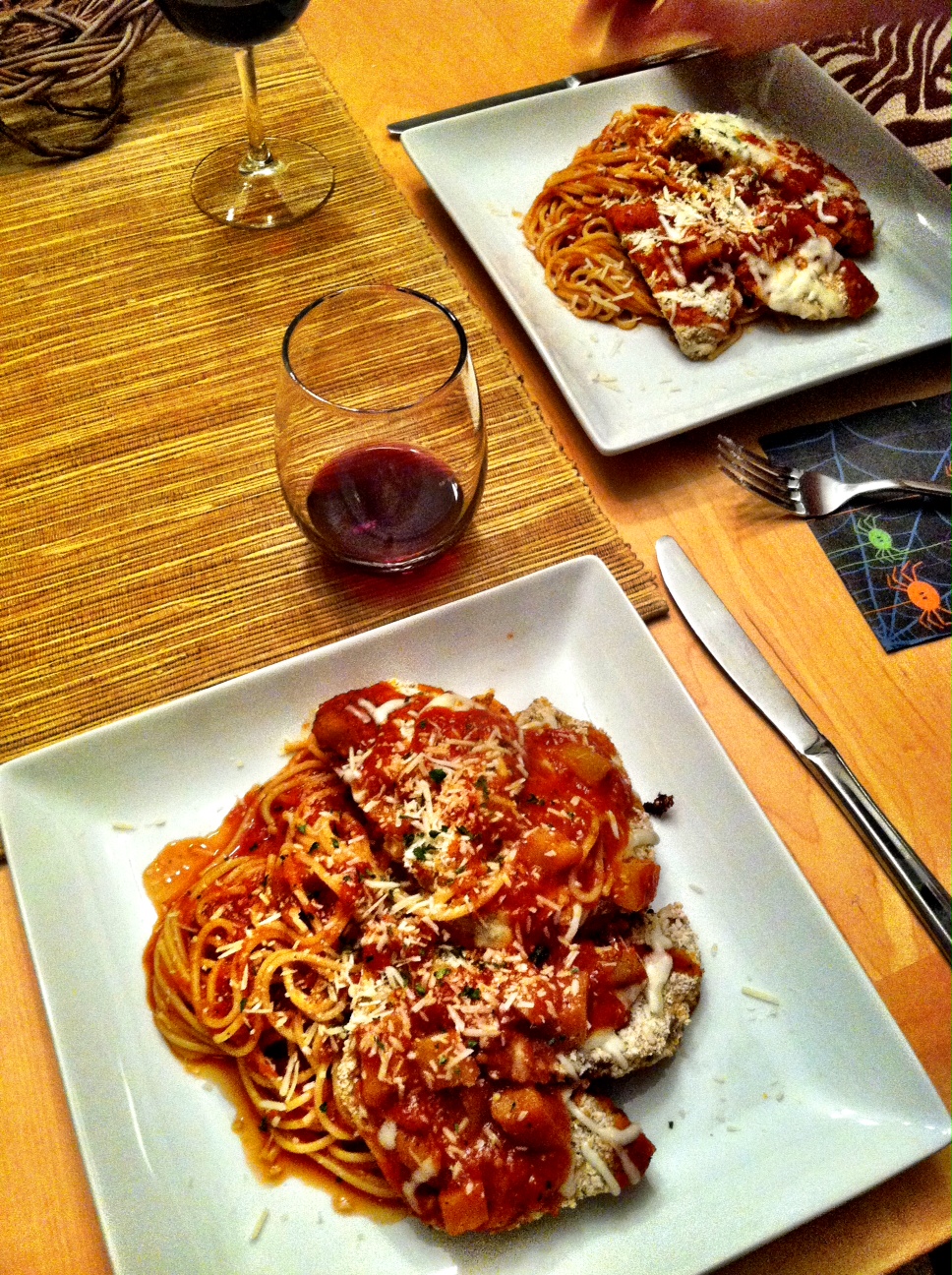
In any case, I present to you: eggy eggy parm parm (aka Eggplant Parmesan):

Eggy Eggy Parm Parm

This is a super fun joke for you Parks and Rec fans. For everyone else I just sound a little spastic.

This meal came together in some fun ways. The sauce is my tomato sauce I’ve posted about twice, and now thrice, cause I’m obviously obsessed with it. And the eggplant came from Mattawoman Creek Farms on the Eastern Shore of Virginia. Last weekend the organization that I direct, Buy Fresh Buy Local  Hampton Roads, helped organize a local food tour on the Eastern Shore. Several farms, restaurants and wineries participated and opened their doors to the public, gave free wine tastings and specials, etc. I’ve been up the shore a few times in my life, but never to spend any real, good quality time, so I was excited to spend the day up there. We took the dogs with us, and they even got a behind-the-scenes tour of Mattawoman Creek Farms, a beautiful and incredibly well run Organic Farm that produces what I think is probably world-famous lettuce, among lots of other things. They have an incredibly long season because they use green and hoop houses very efficiently. I’m really sorry I didn’t take any pictures there, but I was wrangling two dogs in a muddy field just a few days after hurricane Sandy blew through.

We also visited two wineries, Holly Grove Vineyard and Chatham Vineyard. They are both really great and we bought a bottle of Petit Verdot at Holly Grove and the Church Creek Chardonnay at Chatham. Also, they have winery dogs, so you can’t hate that:

Anyways, back to the parm. We didn’t get a chance to go grocery shopping yesterday, so when I went to put dinner together a box of spaghetti, an eggplant and my frozen tomato sauce just made sense. As per usual, I do not really have a recipe for this, but I can tell you my process.

First, I peel the eggplant and cut it into 1” thick rounds. This was a huge eggplant, so I took two of the rounds and diced those pretty small to add to the sauce.

I took the rounds and dredged them in egg, then a breadcrumb/flour mixture and put them on a baking sheet. They went into a 350 degree oven for 20 -30 minutes or until they were easily pierced with a fork. Tender, but not mushy. About 2 minutes before they were ready to come out, I topped them with shredded mozzarella.

The diced eggplant pieces went into olive oil in a large pot and were sauteed with garlic and Italian seasoning until they were tender. Then the thawed tomato sauce went into the pot, maybe two cups? But use however much you need for however many people are eating. To this I add tomato paste to thicken the sauce. Remember, the sauce I make is more like tomato sauce in a can than pasta sauce in a jar, it’s the base for sauces, so it needs to be thickened in some way before putting on pasta. I let this simmer while the eggplant baked.

Cook your pasta according to the directions, drain, then mix into the tomato sauce to keep warm while the eggplant finishes up. Serve the eggplant over the pasta, top with Parmesan and parsley or a little more mozzarella. Do not eat this without wine. Preferably a cab sav, shiraz or chianti.

Yes, those are Halloween napkins. See, I really think Halloween was just yesterday.

I know this is not the traditional way to make eggplant parm, where you bake it with the sauce and big slices of mozzarella right on top and then served without pasta, but I’m not Italian, so there ya go. I also know I have posted a lot of eggplant related dishes. I just love it. People are scared of it, I’ve realized lately. They think it needs to be salted and rinsed and fussed over and that if you don’t do it just right it’s bitter or tough. I have never found any of this to be true. I don’t salt or sweat mine, I peel it, roast, bake or saute it, and I’ve never had one that tasted anything but delicious. And because I like to eliminate meat where I can in our diet, eggplant is the perfect substitution for chicken in this dish, or for sausage or ground beef in the sauce. It just makes the meal heartier while also making it healthier. I also like to use my method above of peeling, cutting and then breading the eggplant slices, then I put them on a baking sheet and freeze them. Then you can take out individual slices of eggplant straight from the freezer to the oven and bake them whenever you want them throughout the winter. I use them in this dish, or baked and put on a sub roll with marinara and provolone in place of meatballs or just as eggplant “filets” topped with bruchetta, cheese, olive tapenade – whatever you want!

How do you like to prepare eggplant? Are you scared of cooking with eggplant? What eggplant myths have you been told?

Virginia is for Wine Lovers

Let me just say here that although I grew up in North Carolina, and will always consider it home, I have been a legal resident and part-time physical resident of Virginia since I was 15, and a full-time resident since I was 18, and I will admit that I love this “Commonwealth” (it’s not a state, they are real picky about that  . . . ). And Virginia’s wine growing region is not the least of the reasons why.

I should also mention that I love wine. A lot. Like, almost as much, and on some days more than food. Jeremy and I have been visiting Virginia wineries for the past five years or so, and this past year we took our dream trip to Napa Valley. We are winos, plain and simple.

Finally, I should mention that October is Virginia Wine Month which is really fortunate, because as the saying goes – grapes don’t grow in ugly places. And Virginia’s Shenandoah Valley in October is the opposite of ugly. So we took advantage of several situations this past weekend: the peak of the fall foliage season in Shenandoah, the fact that my cousin and her husband just moved to Staunton, VA, and Virginia Wine Month = wine-tasting weekend!!

Virginia wine is pretty amazing, and I can say this even more confidently now, having been to Napa and having tasted some of the best wine the USA makes (I’ll post about that trip later, but I’ll just note here that we tasted and toured Opus One in Napa, which might be one of, if not the, most exclusive wine in the region and while MOST impressive, it still does not outshine the beauty, character and body of Virginia Vino). I fully believe that in the next 10-20 years, Shenandoah Valley will be the East Coast equivalent of Napa Valley. According to VirginiaWine.org “By 1995, Virginia had 46 wineries. By 2005, 107. At 192 wineries and counting today, only California, New York, Oregon and Washington have more wineries than Virginia. The persistence of generations of winemakers is paying off. And the vision of one of Virginia’s most renowned native sons, Thomas Jefferson, is now coming true.”

I could write, and several people have, a book about the influence Thomas Jefferson had on Virginia’s agricultural economy, and specifically wine growing, but we won’t get in to that here. The bottom line is, it’s a historical industry that is finally getting its due, and will continue to flourish in years to come as the wines become more well known and the industry continues to improve.

Here was our wine itinerary for the weekend:

Stop 1: Barren Ridge Vineyards

This very small, but well designed winery with amazing views was a great way to start the day. More low-key than some other wineries we visited, we did not feel rushed and tasted several great wines, the highlight of which was their Traminette and Vidal Blanc. Then we took some cheesy pictures:

We were going for a “Saved by the Bell” pose here.

Stop 2: Afton Mountain Vineyards

Afton has a great selection of wines and offers a classic and reserve tasting. I splurged for the reserve tasting (seriously it’s only $3 more, so just do it), and was really impressed with their reds, particularly their Festa di Bacco, a Tuscan style blend of Sangiovese, Cabernet Sauvignon, and Merlot, and their Cabernet Franc, which is a grape that grows particularly well in Virginia – you’ll find a bottle of this at almost every winery in the state. Jeremy, Sara and Bryan (my cousin and her husband) did the classic tasting and all agreed the Riesling, which was semi-dry and not too sweet (less than 2% residual sugar – a number very important to those of us who detest wines that taste like grape flavored corn syrup) was a winner. So we shared a glass of the Riesling on their beautiful patio. Did I mention the weather was perfect? It was perfect.

It was impossible not to take advantage of this photo opp.

Stop 3: Veritas Vineyard & Winery

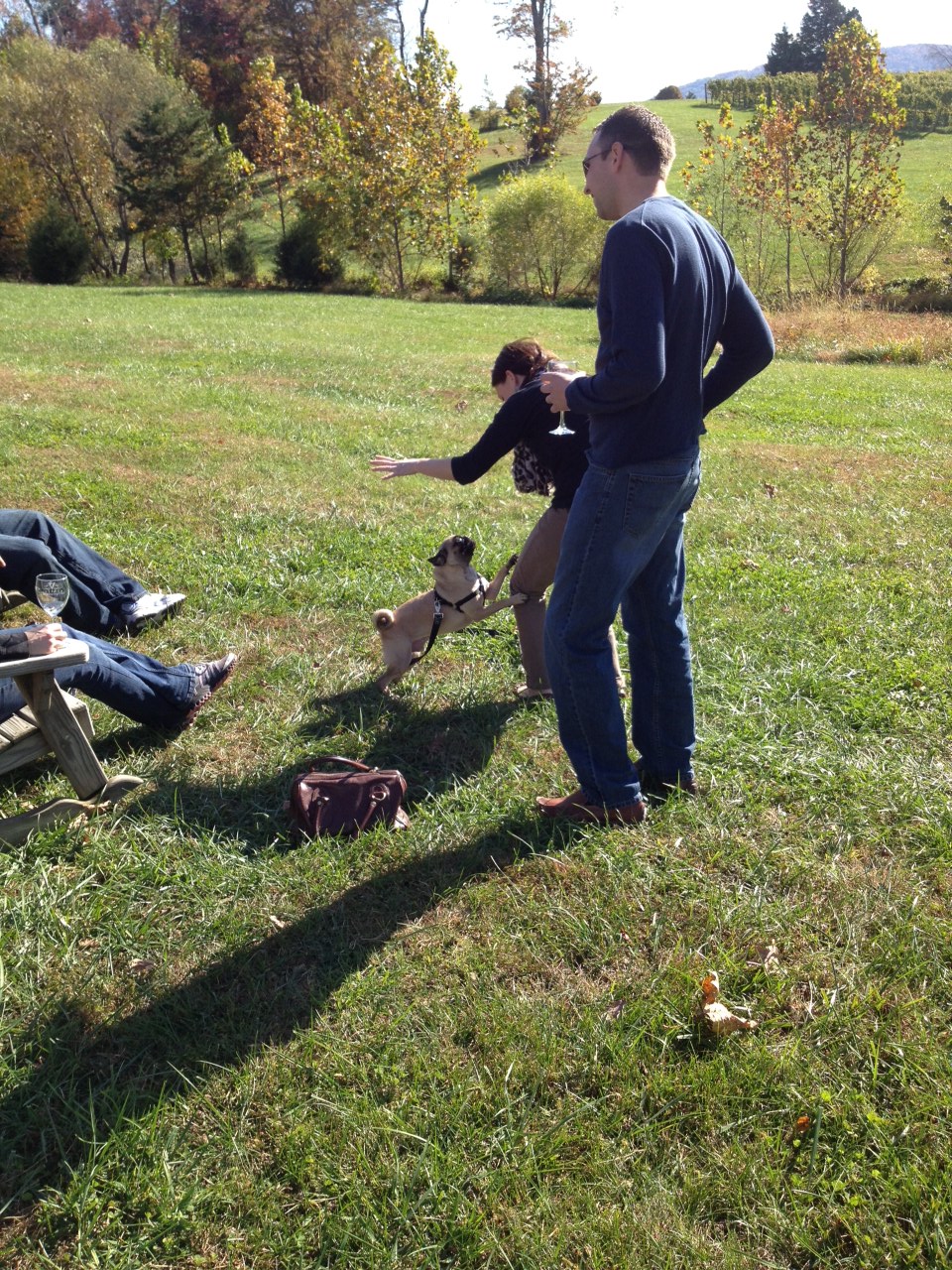
Veritas blew us all away. It was shocking to me and Jeremy because it was busier and crazier than anything we’d seen in Napa. The inside of the farmhouse style building was decorated beautifully, tastings are done in groups throughout the house – either at the bar, or in big, overstuffed leather couches, and they have a fantastic yard with a beautiful view where you can picnic or just hang out or nosh on a house cheese tray like we did. There was a line out the door to taste that never disappeared while we were there – although people were being moved through and seated pretty quickly. Far and away the star of the show here is their Saddleback Chardonnay (2011). This is an “old-world” style Chardonnay that starts in stainless steel and is matured in neutral French oak barrels for 4 months. The results is a smooth wine that is not “oakey” or buttery the way many barrel fermented Chards are. It’s light and smooth but still has a lot of body. We bought a bottle, grabbed a cheese tray and set up camp for a while. And wouldn’t you know it, I found the only pug visiting wineries that day in Shenandoah?

Their decor was pretty awesome. Also, I have enough wine corks to do this in my own house.

I found the pug!

I never miss an opportunity for pug play.

It’s just too pretty everywhere up there.


Stop 4: Pollak Vineyards

Our intention had been to stop after Veritas, but at the tasting bar a gentlemen informed Sara that Pollak was very close and a must-taste, so we hit the road again and headed to this fairly new, but well done vineyard that grows enough grapes that they actually sell some of their crop to other local wineries. The owners here originally owned a winery in California’s Carneros region of Napa Valley. The tasting bar was PACKED, so this man must have been really spreading the word, but we waited patiently for our taste, and decided to spend some time on the property here as well, so we all headed outside with a bottle of their Pinot Gris and a glass (for me) of their Cabernet Sauvignon (a hard wine to make in VA, but this one was worthy). Sara took a pretty awesome panoramic picture of the winery and our table, and then we took some photo opps down by their little pond . . . at this point we may have tasted a bit too much wine to be standing that close to a body of water, but we took our chances.

packed!

A pretty sweet panoramic. Thanks, iPhone.

You are seeing bad decisions in action.

Best to make bad decisions with people you love.

Or stay a safe distance. Probably better.

I took a much more hysterical picture of these two, but Sara is insistent that it is not flattering. Pish posh.


The whole day was awesome and I remain amazed and impressed with the wine grown in my “commonwealth” and as much as I love Napa, this is MY wine growing region, and I will continue to support it, no matter what month it is.

Have you been to a Virginia Winery or tasted a Virginia Wine? If you live outside of Virginia – have you tasted any wines produced in your state? What did you think?

We interrupt your previously scheduled Friday . . .

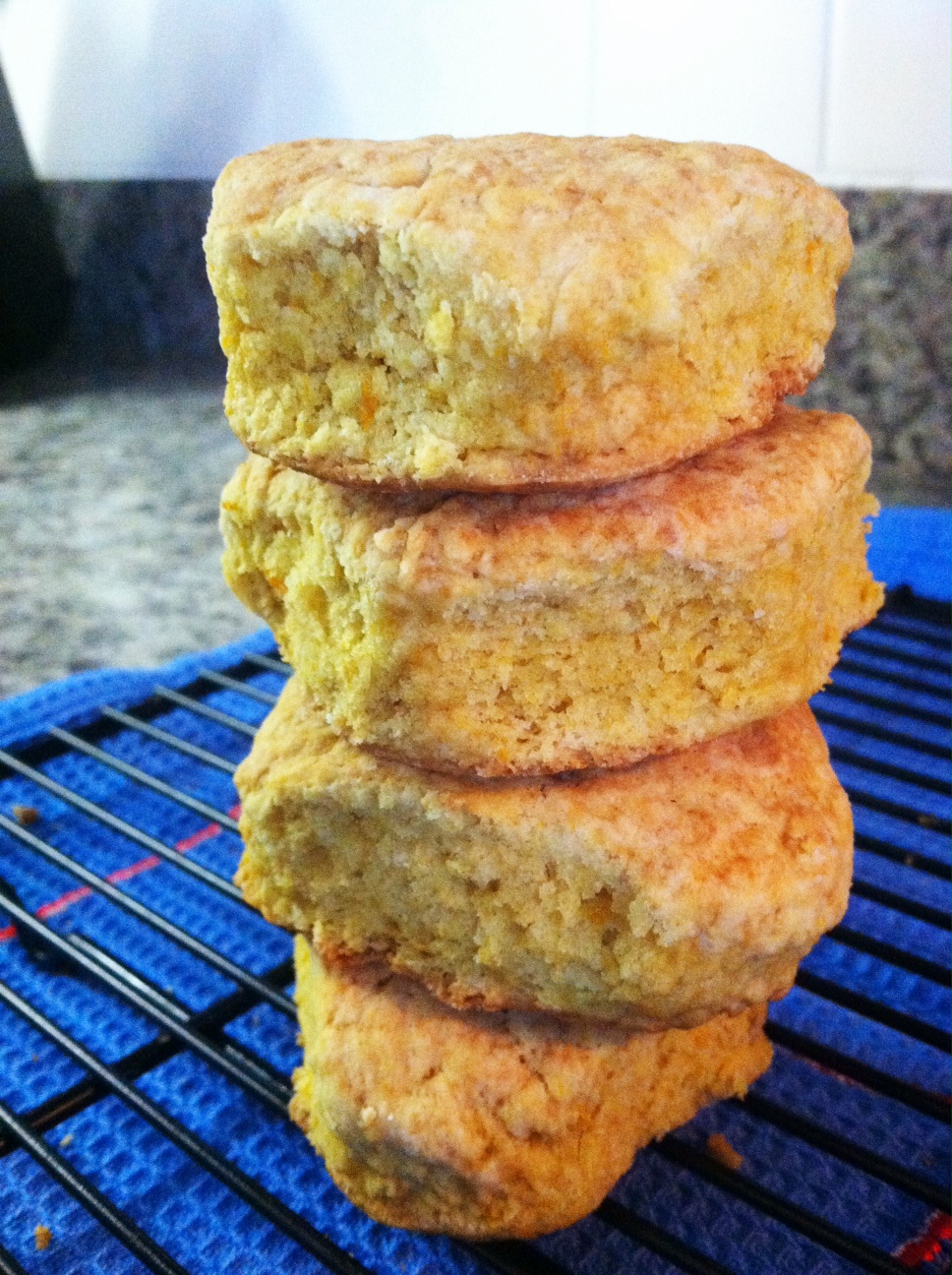
To remind you that sweet potato-ham biscuits are delicious and should be eaten daily.

ham

1. Fry some of this


sweet potato bisuits

2. Make some of these


sweet potato and ham biscuits

3. Put them in your mouth


Edwards Ham and homemade Martha Stewart sweet potato biscuits made with local sweet potatoes. It would be a crime to live through another weekend without making these. Don’t break the law of ham. Just make some.

Local Beef Three Ways

I’m excited to share with you all three different ways to approach one ingredient: local, pasture-raised beef. This will be the first time I’ve featured beef on the blog, so hold on to your steak knives! Actually, don’t. I’m not going to be discussing steaks. Sorry, you’re on your own there. The beef used in all of these recipes came from Windhaven Farm in Windsor, VA. They raise “Natural, Angus Beef” and here is how they describe it (from their website):

“Natural beef is a healthy and safe choice of quality beef.  The cattle are birthed on our farm.  We do not receive feed stock from unknown sources.  Our farm does not mass produce cattle.  The cattle are antibiotic free and do not receive growth hormones. The cattle are fed 100% grass, hay, and grain.  Therefore the cattle are healthier and leaner resulting in lean, healthy beef. Natural means: No antibiotics, hormones, ionophores, or medicated feeds No feeding of animal by-products. Grass fed, grain finished – grain is used to help “finish” and marble the beef. All natural from birth. Parasiticides are not used within 30 days of slaughter date.”

You can also purchase completely grass-fed beef from them in 1/4, 1/2 or whole packages. Yes, that means 1/4, 1/2 or a WHOLE COW. I know lots of cross-fitters (paleo dieters) that go in on entire cows together, and it actually works out to be a great deal, if you have the room to store even a small portion of an entire cow. I do not. So I usually order their beef in completely reasonable increments, like you know, a pound of ground beef. Their beef is available for pick up at their farm, or through Coastal Farms Co-op and at a few retail stores in Hampton Roads like Heritage Natural Market.  They also do occasional deliveries around the area.

The weather is really cooling down around here and a lot of the farmers markets have stopped for the season and while there is still lots of produce to be found if you’re willing to look for it, it is definitely starting to feel like hearty-food weather. So here are three great options to satisfy your cool-weather cravings:

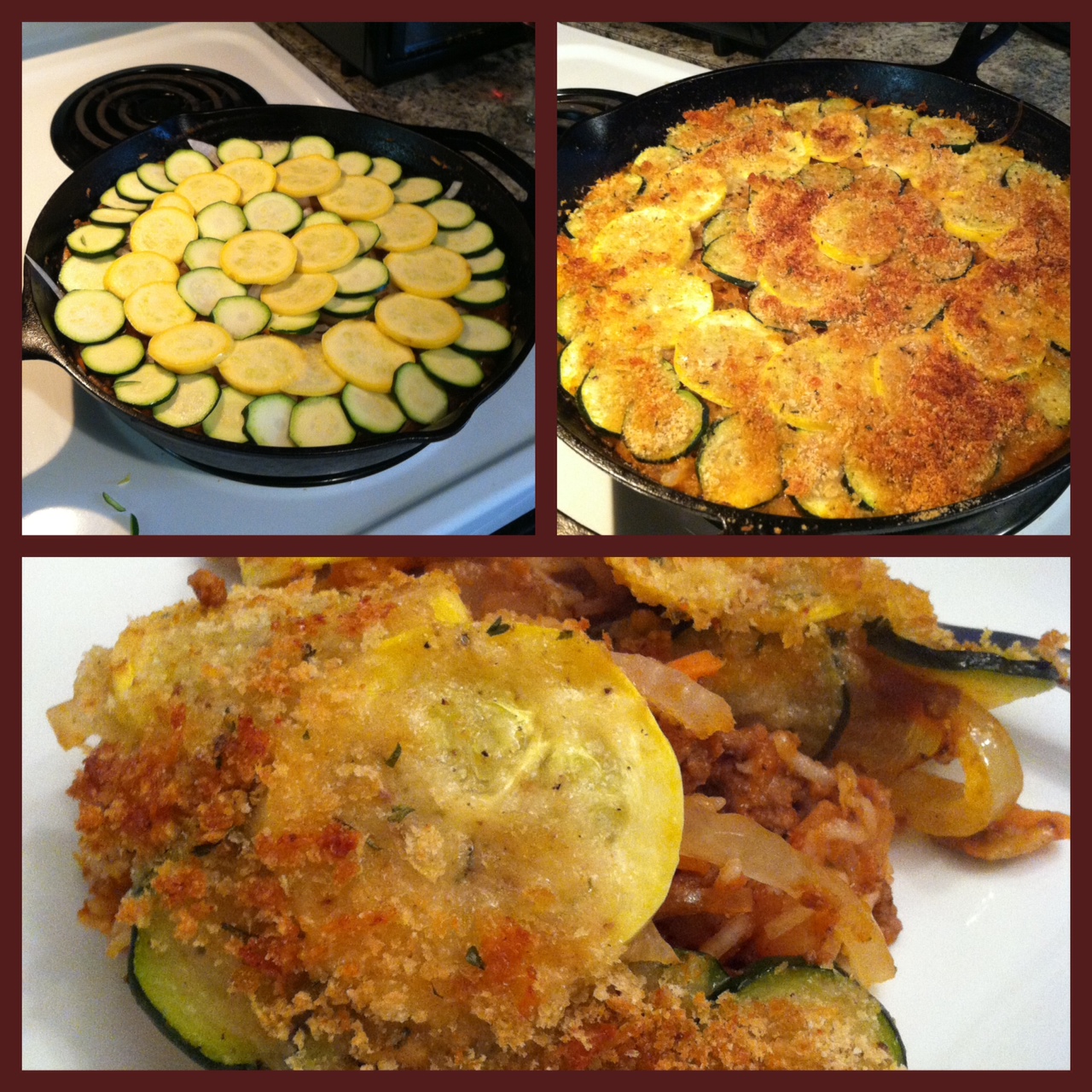
Beef and rice skillet with late-summer veggies

Meat Sauce:

Ingredients:

  • 1 1/2 tsp. olive oil
  • 1 pound ground beef
  • 1/2 medium yellow onion, diced small
  • 2 carrots, shredded
  • 2 cloves garlic, roughly chopped
  • Salt and pepper
  • 1 can (28 oz) whole peeled tomatoes, pureed in a blender

Directions:

  1. In a large heavy pot, heat oil over high. Add meat and cook, breaking it up with a wooden spoon, until it begins to brown, about 5 minutes. Add onion, carrots, and garlic and cook until meat is browned and onion is soft, about 5 minutes. Season with salt and pepper, add tomato puree, and bring to a rapid simmer. Cook, stirring occasionally, until liquid is slightly reduced, about 15 minutes. Season with salt and pepper.

Casserole:

Ingredients:

  • 1/2 cup fresh breadcrumbs
  • 1/4 cup grated Parmesan (1 oz)
  • 2 tbsp Olive Oil, divided
  • meat sauce (recipe above)
  • 1/2 cup long-grain white rice
  • 1/2 medium yellow onion, thinly sliced lengthwise
  • 2 zucchini or yellow squash, very thinly sliced
  • salt and pepper

Directions:

  1. Preheat oven to 475 (Fahrenheit). Combine breadcrumbs, Parmesan and 1 tblsp olive oil.
  2. In a large cast-iron skillet, bring meat sauce to a rapid simmer over high. Stir in rice and remove from heat.
  3. Top with onion, then carefully arrange zucchini/squash in a single, slightly overlapping layer. Season with salt and pepper, drizzle with remaining tbs. olive oil and top with breadcrumb mixture. Return to heat and bring to simmer.
  4. Cover with foil and bake 10 minutes. Remove foil and bake until rice is cooked through and breadcrumbs are golden, about 10 minutes more. Let cool 5 minutes before serving.

*This recipe is adapted from Everyday Food

The meat sauce part of this recipe can be adapted and used for anything – on top of pasta, as sloppy-Joe filling, mixed with cheese and stuffed into pasta shells – whatever you want! This is a really perfect recipe for right now because squash and zucchini are still available locally, but it’s still hearty and warm and filling for fall.

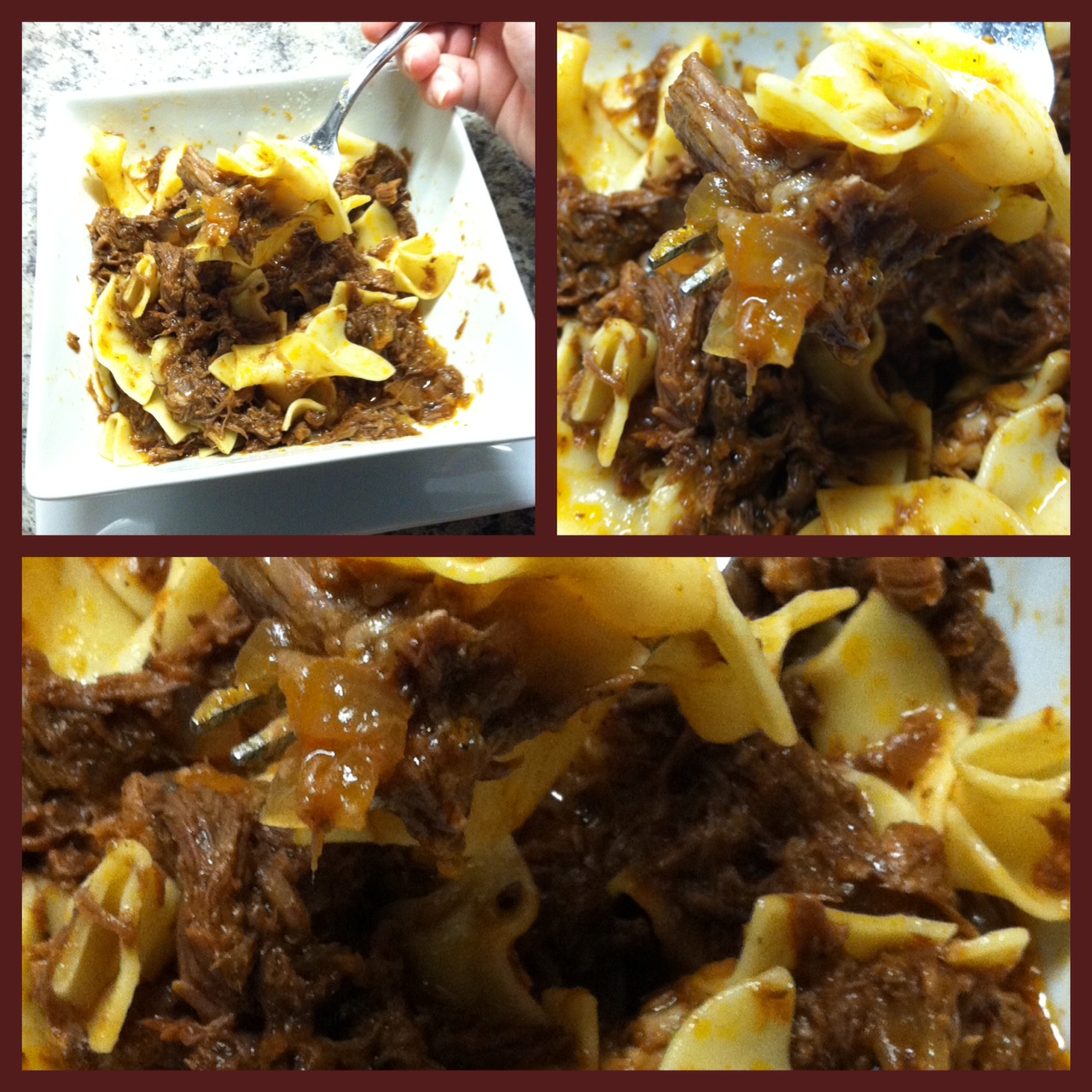
Slow Cooker Beef Ragu

Ingredients:

  • 1 medium yellow onion, diced small
  • 3 cloves of garlic, minced
  • 1 small can of tomato paste
  • 3 tbs chopped fresh oregano
  • 1 beef chuck roast (2-4 lbs is fine)
  • coarse salt and pepper
  • 1 tbs red-wine vinegar
  • 1 tbs balsamic vinegar

Directions:

  1. In a 5-6 quart slow cooker, combine onion, garlic, tomato paste, oregano, salt and pepper to taste. Season roast with salt and pepper and place on top of onion mixture.
  2. Add 2 cups of water, cover and cook on high until meat is tender and can easily be pulled apart with a fork, 4 1/2 hours (or 9 hours on low).
  3. Let cool 10 minutes, then shred meat in slow cooker with 2 forks and stir in vinegar to taste.

This recipe was also adapted from Everyday Food

You could serve the ragu over whatever you liked – rice, pasta, polenta, mashed potatoes. I had originally planned on serving it over spiced and grilled polenta, but then the grocery store by our house decided stocking polenta (and anything else I’m ever specifically looking for) is stupid. So for whatever reason I opted for no-yolk egg noodles instead. Big mistake. I’ve never liked these things and I still don’t. There’s not enough salt in the Dead Sea to make them taste like anything at all, and the texture is slippery and slimy. The ragu was great, but my suggestion is to go to a better grocery store than mine and find some good polenta, or make your own, or make some stiff grits or something besides egg noodles. Seriously, maybe even some wood shavings from the pet store might work better. Just go with your gut.

Taco Bowls

Ingredients:

  • Burrito-sized soft tortillas
  • Olive oil spray
  • 1 lb ground beef
  • Taco seasoning
  • Refried Beans
  • Taco toppings of choice

Directions:

  1. Preheat oven to 425. Place a cooling rack inside a baking sheet and turn 4 ramekins upside down on the rack. Microwave your tortillas for 15 seconds to make them soft. spray each ramekin with olive oil. Mold tortillas over each ramekin, making them into the shape of a wide bowl. Spray outside of tortillas with additional olive oil.
  2. Place baking sheet with tortillas into the pre-heated oven very carefully (the ramekins will want to slide around on the rack). Bake for 10 minutes or until golden and crispy. Remove from oven and let cool on the ramekins. Wait until they have cooled to the touch to remove them from their molds. This will ensure they keep their shape.
  3. Meanwhile, brown your ground beef in a large skillet over medium heat. Drain off fat. Return meat to the burner and add 1/4 cup of water and taco seasoning to taste. Keep on low until tortillas are finished baking.
  4. In a small saucepan, warm your refried beans until smooth and heated through.
  5. Once the tortillas have cooled to touch, fill them with your taco accouterments: I like to make the base with refried beans, topped with the beef, then topped with shredded jack or cheddar cheese, taco sauce, diced tomatoes, lettuce, some mashed and seasoned avocado and a dollop of plain, nonfat Greek  yogurt (I use this in place of sour cream in everything. The taste is exactly the same, but without the fat and it’s easier on my stomach).

You can make more than 4 bowls at a time, if you need them. I just only needed four and conveniently I only have 4 ramekins. Jeremy and I each ate two bowls (they are smaller than the ones you get at Mexican restaurants, so put your judgey face away). And we had chips and salsa on the side. This is a fun update on taco night.

Taco salads are great until you decide to start eating the shell. The idea seems great and starts out totally civilized. Something like this:

Oh yes, I’ll just take this one little bite of the shell.

Then all of a sudden all hell breaks loose, a tornado sweeps through your taco salad and you’re left with this tragedy:

The horror! The horrooooorrr!

Which is fine, really – it all tastes the same anyways. But if aesthetics is your thing, then just eat the salad portion with tortilla chips or something and save your bowl for decoration or to hold your keys or a hat for a small child or large dog – your call.

So there you have it – local beef three ways. Certainly you could do all of these recipes with beef you buy at the grocery store, that came from a CAFO (Concentrated Animal Feeding Operation), where cows are fed nothing but grain, which makes them sick, which requires them to take antibiotics, which remains in the meat, which over-dosed the entire population with antibiotics so that we all have reduced good bacteria in our bodies so that we are all more prone to sickness so that we all end up having to take more antibiotics like the poor cows before us, which in the long run makes us even more sick, needing more medication and so on and so forth. Again – your call.
Besides that, grass-fed beef has higher omega-3’s, is leaner, often has more protein, and is generally ethically raised. There’s no doubt red meat is not the most healthy thing we can all eat, but if you’re going to eat it (and we all are – the average American eats 110 lbs of red meat every year), then make it the healthiest, most environmentally friendly, ethical meat that you can eat. Cost? Please. Let’s not get into that – just eat your taco bowl and enjoy the grass-fed goodness.