Happy Hour

I know I’ve been out of blogging mode for awhile, but we’ve been working on getting our house on the market – it will be for sale this week, just in time for us to fly to Seattle for a week. It’s been hectic. So, in light of that, I figure it’s time for a drink. And since my mint came up like crazy with the heat this week, I figured it’s mojito time.

Not a lot of locals know that we have a rum and vodka distillery right here in Hampton Roads- Chesapeake Bay Distillery. I was “blessed” with a bottle of their small-batch rum a few months ago when I went to visit the Distillery. So between my backyard mint and this “Chick’s Beach” rum, this really is a local imbibe worth sharing.

local yokel mojito

20130415-183149.jpg

Snip several stems of fresh mint and muddle in the bottom of a large glass with a spoonful of raw, organic sugar and the juice of half a lime. Fill the glass with ice, then fill the glass 1/3 full with rum, then a jigger of sweetened lime juice, the juice of the other half of the lime and fill the rest of the glass with club soda. Stir well and enjoy.

Cheers!

Pantry Raid IV: better bulgur

Bulgur sounds gross, and I get that. But it’s really not. Bulgur is parboiled cracked wheat berries. It’s a super whole grain with a wonderful nutty taste. It also has a great texture that I can only describe as “toothsome.” It isn’t hard, but even after being soaked, it has tooth –  like very good al dente pasta. Just one cup of bulgur has over 25 grams of fiber and over 17 grams of protein. And incidentally, I had a huge bag of it in my cabinet that I needed to start working on getting rid of.

Bulgar, like quinoa, is a great base for salads. This bugar salad recipe came from Everyday Food, and it’s really light and delicious and keeps well. Make it at the beginning of the week, measure it out into individual containers and then grab them for a healthy lunch on the go. This recipe makes a lot – like most grains, just one cup, once cooked, makes a huge amount of food and because it is high in fiber and protein, you don’t need to eat much to get full. I made this salad for dinner with a yummy marinated salmon and still had enough left over for lunch several days that week. This salad also incorporates chick peas (or Garbanzo beans – whichever name you prefer). Chick peas are also full of protein, so you really can’t go wrong here. Leave out the feta for a (still delicious) Vegan side dish.

Bulgur and Chick Pea Salad

bulgar with salmon close

Ingredients

  • 1 cup bulgur
  • 2 cups boiling water
  • 1 can (15.5 ounces) chickpeas
  • 1 tablespoon lemon zest and 2 tablespoons juice
  • 3 tablespoons extra-virgin olive oil
  • 1/4 cup roughly chopped fresh dill
  • 1/2 cup crumbled feta (2 ounces)
  • Salt and pepper

Directions

  1. In a large bowl, combine bulgur with boiling water. Cover and let stand 20 minutes; drain and return to bowl. Rinse and drain chickpeas, then add to bowl with lemon zest and juice, olive oil, dill, and feta; season with salt and pepper.

For the salmon, I combined a little olive oil, a dash of white wine vinegar, the juice of half of a lemon, some dill, salt and pepper and put the salmon into some tin foil, made a pouch, poured the marinade over the salmon, wrapped it up really good and baked at 375 for about 15 minutes. It was perfect together and it would be a crime to eat this meal without a glass of good Chardonnay. So don’t let the name throw you off, replace that pasta side dish with a healthier bulgur alternative.

If you eat this without a glass of Chardonnay, you are committing a crime against food.

If you eat this without a glass of Chardonnay, you are committing a crime against food.

The possibilities here are endless – Greek bulgar salad with grilled chicken, feta, cucumbers, tomatoes and kalamata olives; bulgar and lentil salad with grapefruit vinaigrette, breakfast bulgar with maple syrup and baked apples . . . OK, I’m starting to sound like a bulgur growing Bubba from Forrest Gump. You get the picture.

Pantry Raid – Part III

I’m a little bit obsessed with Alton Brown and his show, Good Eats. I have the first two volumes of his Good Eats cookbooks, some DVDs and have seen almost every episode of the show. It’s kind of weird because in many ways, we are completely different cooks. Besides the fact that he is a famous chef and genius….he’s very precise and particular about the way his recipes are made and I’m . . . not. But something about his knowledge base and educational and visual illustrations of how cooking actually works is fascinating to me. After watching a show about cookies you feel like you just finished a course at Le Cordon Bleu….in a good way.

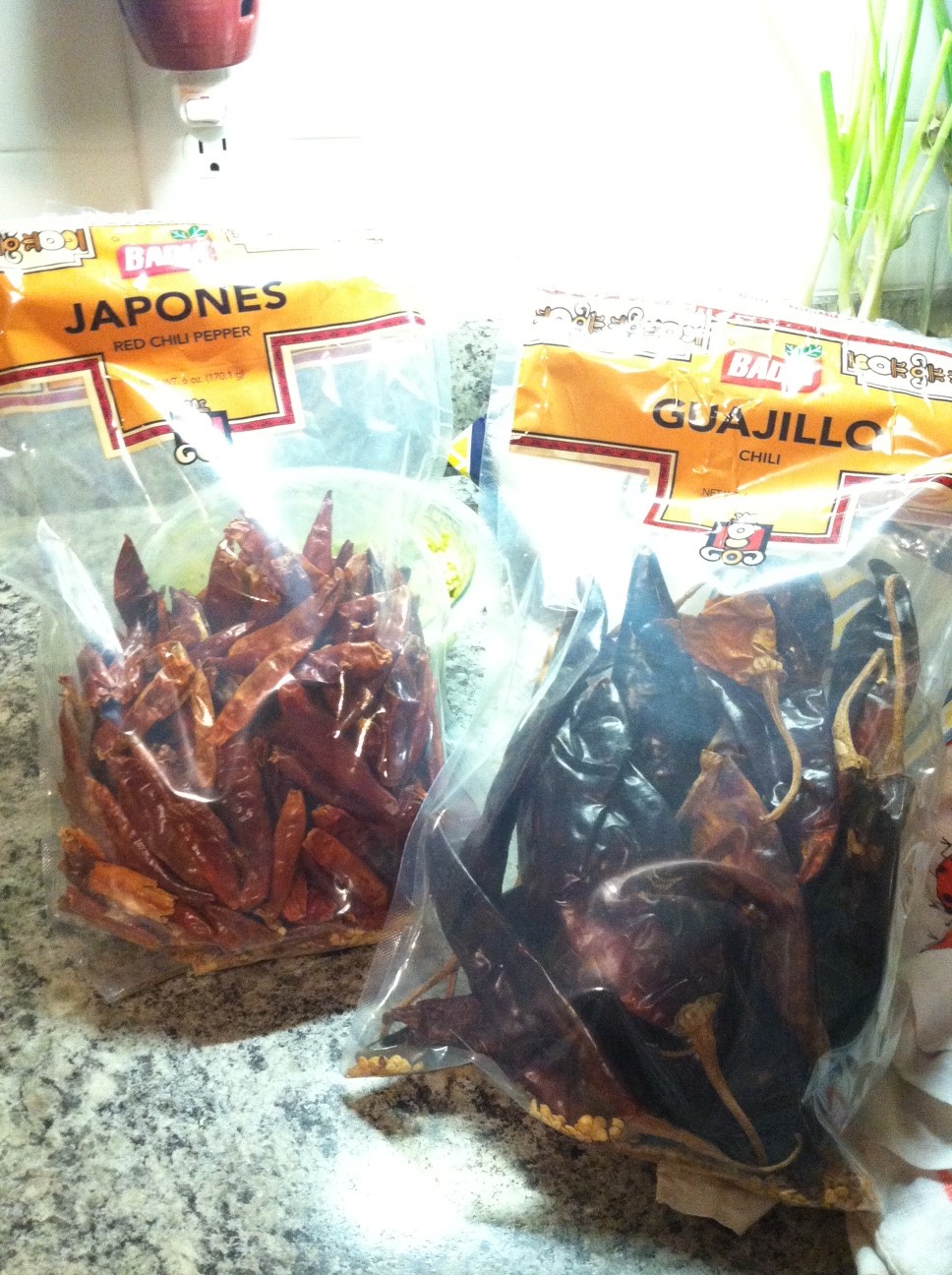
Anyways, he has a recipe for his own chili powder and “cowboy style” chili. This is the kind of chili that was really made out on the range – without beans or corn or potatoes or a lot of fluff. Just meat, stewed with chilies and tomatoes. I made this recipe for the first time a year or so ago, and because I wanted to make my own chili powder, like he does for his, I purchased two different kinds of dried chilies. Not the kind he suggested, because I couldn’t find them, and I’m not a perfectionist like him, but they were similar enough. The problem is, these bags of dried chilies (found in the “International” aisle of your grocery store) are HUGE. You only need about 9-12 chilies to make your powder, which leaves you with about 300 chilies. So, I decided I just needed to make this chili or at least my own chili powder, more often. The truth is, chili powder that is pre-bottled at the grocery store doesn’t really taste like much. It’s usually not very spicy and even if it is, it can lose its flavor quickly. This chili powder is pretty easy to make, and is incredibly flavorful and can be as spicy as you want it, depending on the chilies you use.

AB’s Chili Powder
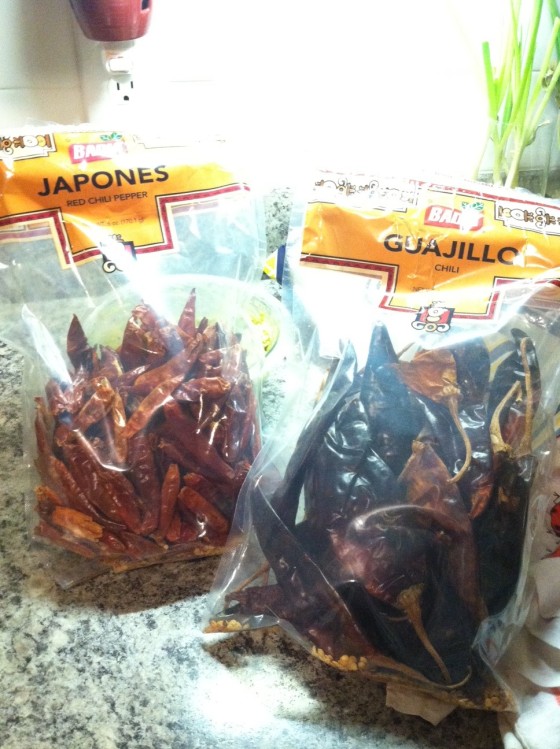
Dried Chilies

Dried Chilies

Yield: approximately 3/4 cup

Ingredients

  • 3 ancho chiles, stemmed, seeded and sliced
  • 3 cascabel chiles, stemmed, seeded and sliced
  • 3 dried arbol chiles, stemmed, seeded and sliced
  • 2 tablespoons whole cumin seeds
  • 2 tablespoons garlic powder
  • 1 tablespoon dried oregano
  • 1 teaspoon smoked paprika

Directions

  1. Place all of the chiles and the cumin into a medium nonstick saute pan or cast iron skillet over medium-high heat. Cook, moving the pan around constantly, until you begin to smell the cumin toasting, approximately 4 to 5 minutes. Set aside and cool completely.
  2. Once cool, place the chiles and cumin into the carafe of a blender along with the garlic powder, oregano, and paprika. Process until a fine powder is formed. Allow the powder to settle for at least a minute before removing the lid of the carafe. Store in an airtight container for up to 6 months.

I used six Guajillo chilies and three Japones. Usually the bags rate the chilies in spiciness on a 5 chili scale, so you can just purchase whatever heat intensity you prefer.

Once you have your chili powder made, you’re read to make the actual chili. His original recipe calls for a pressure cooker, but you can use a Dutch Oven, it will just take a bit longer. The instructions below are for using a large, cast iron Dutch oven.

AB’s Cowboy Chili
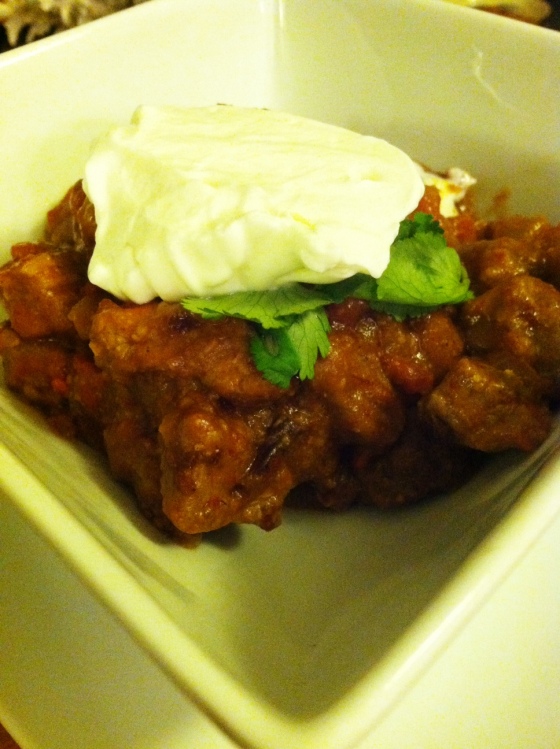
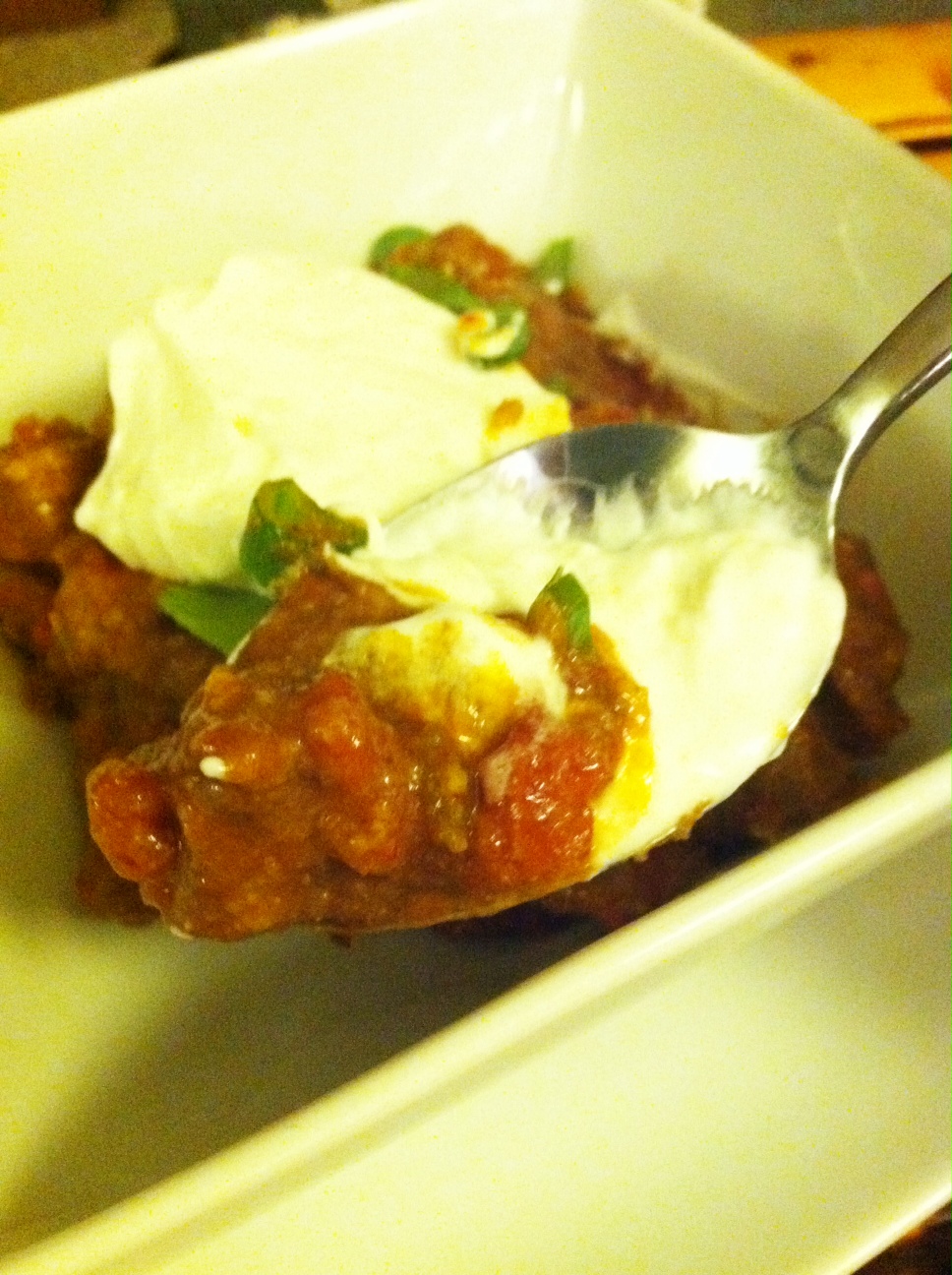
Cowboy Chili

Cowboy Chili

Ingredients

  • 3 pounds stew meat (beef, pork, and/or lamb)
  • 2 teaspoons peanut oil
  • 1 1/2 teaspoons kosher salt
  • 1 (12-ounce) bottle of beer, preferably a medium ale
  • 1 (16-ounce) container salsa
  • 30 tortilla chips
  • 2 chipotle peppers canned in adobo sauce, chopped
  • 1 tablespoon adobo sauce (from the chipotle peppers in adobo)
  • 1 tablespoon tomato paste
  • 1 tablespoon chili powder
  • 1 teaspoon ground cumin

Directions

  1. Place the meat in a large mixing bowl and toss with the peanut oil and salt. Set aside.
  2. Heat a large, cast iron Dutch Oven over high heat until hot. Add the meat in 3 or 4 batches and brown on all sides, approximately 2 minutes per batch. Once each batch is browned, place the meat in a clean large bowl.
  3. Once all of the meat is browned, add the beer to the pot to deglaze the pot.
  4. Scrape the browned bits from the bottom of the pot. Add the meat back in along with the salsa, tortilla chips, chipotle peppers, adobo sauce, tomato paste, chili powder, and ground cumin and stir to combine. Put the lid on top and put into a 375 degree oven for two hours, stirring every thirty minutes. Serve with preferred toppings.
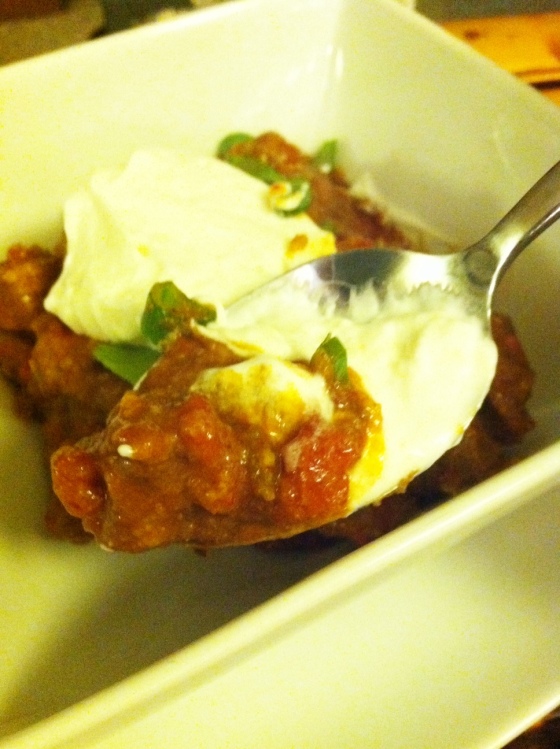
Cowboy Chili

Mmmmm…..chili

This recipe helped me use up a few things in my cabinet: the chilies for the chili powder, some left-over taco shells, which I crushed and used in place of the tortilla chips, a batch of homemade salsa that had been in the freezer since the summer and some chipotle peppers/adobo I had saved in the freezer. I need these more often than you’d think, but I always only need one or two at a time and usually one small can has about 5 or 6 and cost like $3. No point in wasting them – just freeze the remainder of the can and use at will. I also used local, grass-fed beef from Windhaven Farms which, of course, was delicious. Their “stew beef” pack was the perfect type of beef for this.

This chili is serious. It’s not your average American beans and corn and relatively mild type of thing. And don’t get me wrong – I love those kinds of chilis also, but if you want something really hearty and really filling and really classic, this is the way to go. I topped mine with plain, nonfat Greek yogurt (in place of sour cream), sliced green onions and cilantro. Chopped onions would also be nice, or a wedge of lime, or cheese if you want to go all out, although AB swears the only acceptable toppings are onions and cilantro. But again, I’m no perfectionist . . .


Pantry Raid – Part II

One of the things that had created an abundance of random odds and ends in my cabinets was the detox diet I did back in the late summer/early fall. My diet was extremely restricted and so I purchased a lot of things that were on the “OK” list that I would otherwise not eat like raw nuts, strange beans and wild rice. I had two boxes of wild rice and a can of Aduki beans that I just had no idea what to do with, but I found a recipe for wild rice and aduki bean stuffed acorn squash on Pinterest. Seriously, if you look long and hard enough, you will find the exact recipe you need. The recipe was from a vegan site, so I made a few changes to it to fit with what I had on hand, and it turned out pretty good. With a side of raw kale salad marinated in a home-made vinaigrette, this little vegetarian meal packed a serious healthy punch. Plus, it’s so protein packed, I could only eat half of it.

Wild Rice and Aduki Bean Stuffed Acorn Squash

Wild rice stuffed acorn squash

Ingredients:

  • 2 acorn squash, sliced lengthwise, seeds scooped out
  • Olive Oil
  • Wild Rice
  • 1 cup chopped onion
  • 1 can Aduki beans, rinsed and drained
  • 1 tbs Soy Sauce
  • 2 tbs honey (or Agave)
  • Pepper and Salt to taste
  • Cranberry sauce (canned or homemade)

Method:

  1. Rub the acorn squash down, inside and out, with olive oil, season with salt and pepper. Place an a baking sheet and cover with foil. Bake at 375 degrees for an hour, or until tender. 
  2. Meanwhile, cook the wild rice according to its directions, enough to make two cups.
  3. Heat the oil over medium heat in a large skillet. Add onions and sautee until soft. Add in Aduki beans, soy sauce, honey and season with salt and pepper. Combine and keep warm over medium low heat.
  4. Remove squash from oven when done, and scoop out the squash, leaving about 1/2” of squash in the shell. Chop the squash and mix it into the bean mixture and add the rice. Combine well over low heat until warmed through.
  5. Load each squash half with the mixture and top with cranberry sauce. Serve immediately.


I still have one box of wild rice left that I’m not sure what to do with, but at least those beans aren’t staring at me anymore.

What random item do you have in your cabinet that you’re just not sure what to do with?

The root of it all

I just gave myself an award for the most clever blog title ever.

i ❤ beets

It is a shame, I realized, that this blog’s namesake has never really been examined thoroughly. I think in my very first blog post I may have posted a picture of a beet dish I had done, but I’ve never really delved into this amazing little root that inspired me to make this blog. There are a few reasons that beets are the thing I happen to heart. They are available locally, they are available at several times throughout the year and many people don’t like them. Why is that a reason to make beets the central theme of a blog? Because I think I can change people’s minds. I think a lot of foods out there that deserve our attention but suffer general distaste have just been presented wrong all this time. Like the poor Brussels sprout, which I will post about later . . .

Take, for instance, my husband who insisted he hated beets. So I asked in what format he had experienced beets in the past and he said either canned, pickled or boiled to death. Well, no wonder. He also hated Brussels sprouts for similar reasons. But there is a simple answer to both of these food fears and it is this: roasting. Roasting, which uses dry, indirect and diffused heat (such as an oven) increases flavor by caramelization and the Maillard browning reaction. Essentially, roasting enhances the sugars in foods through a process called pyrolysis, which I will not get into, because I barely passed chemistry. But here is what I do know: it makes food delicious. Especially foods like beets, which already have a high natural sugar content, just waiting to be released.

Beets are also so nutritious. Here are some facts from Nutrition and You about beets:

  • Beets are a rich source of phytochemical compound, glycine betaine. Betaine has the  property of lowering homocysteine levels within the blood. Homocysteine, a highly toxic metabolite, promotes platelet clot as well as atherosclerotic-plaque formation, which, otherwise, can be harmful to blood vessels. High levels of homocysteine in the blood result in the development of coronary heart disease (CHD), stroke and peripheral vascular diseases.
  • They are also a rich source of B-complex vitamins such as niacin (B-3), pantothenic acid (B-5), pyridoxine (B-6) and minerals such as iron, manganese, copper, and magnesium.
  • The root has very good levels of potassium. 100 g fresh root has 325 mg of potassium or 7% of daily requirements. Potassium lowers heart rate and regulates metabolism inside the cells by countering detrimental effects of sodium.

And while us die-hard beet fans can eat a beet canned, pickled, boiled, grilled or anything else, for those skeptics out here, this is my GO-TO beet recipe. I’m not sure where it originated from…I think a friend may have suggested this method and I’ve just sort of made it my own over time, I’m not really sure. My hope is that you will love it enough to make it your own, adding, subtracting and substituting to your liking.

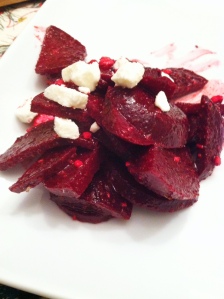
Roasted Beet Salad with Vinaigrette

Ingredients: Beets in vinaigrette

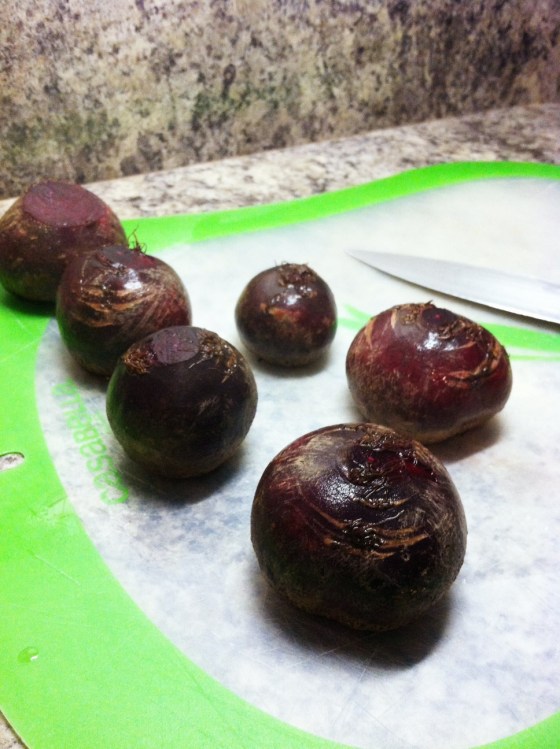
  • One bunch beets (as seen above)
  • 3 tbs olive oil
  • 1 tbs vinegar of your choice (balsamiq, red wine, champagne, whatever you like)
  • 1 shallot, finely diced
  • 1 tbs dried herbs (Italian, Herbs de Provence, fresh or powdered garlic or whatever else you’d like)
  • Salt and Pepper to taste
  • 1 cup crumbled feta cheese

Method:

  1. Pre-heat oven to 375 Fahrenheit. Cut the beets off their stems and trim off the tops and the “tails” of each beet. Clean each beet so they are free of dirt. Wrap each beet in individually in tin foil and place in the pre-heated oven, directly on the center rack. Roast for 30-40 minutes, or until each beet is easily pierced with a knife. 
  2. While the beets are roasting, create your vinaigrette. The most important thing to remember here is the a vinaigrette dressing always 3 parts oil to 1 part vinegar. You can use any combination or any measurement (tsp, tbs, cup, etc), as long as you keep that ratio the same. Pour your oil, vinegar, shallots, herbs, salt and pepper into a medium sized bowl and whisk until they are emulsified. Set aside until beets have finished roasting.
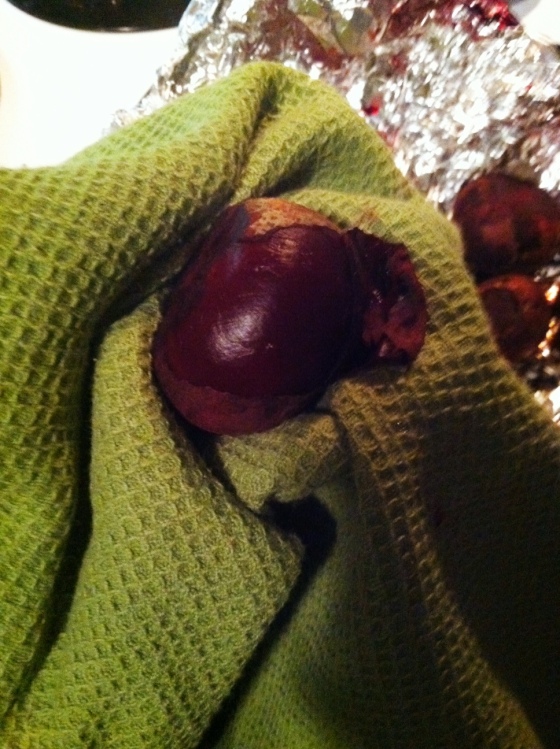
  3. When beets are easily pierced with a knife, unwrap from tinfoil and allow to cool. Take an old dishtowel and peel the beet’s skin off with the towel – if it’s roasted to completion, the skin should slide off easily. Do this with each beet.
  4. Cut each beet in half or in quarters, if large, and cut into thin slices. Re-whisk your vinaigrette so it is well blended, then add your beets to the bowl and toss to coat. Plate, then top each serving with a spoonful of feta cheese.
Trim and wash beets

Trim and wash beets

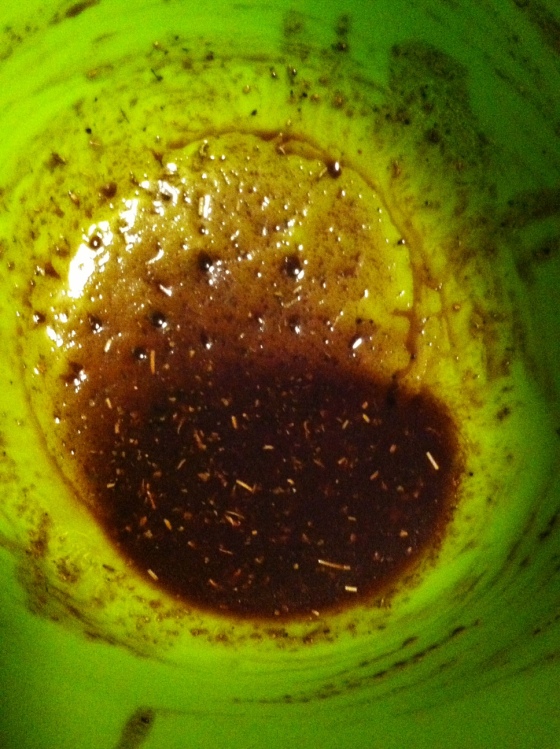
A well emulsified vinaigrette

A well emulsified vinaigrette

Beets

After roasting, remove skin with a dish towel

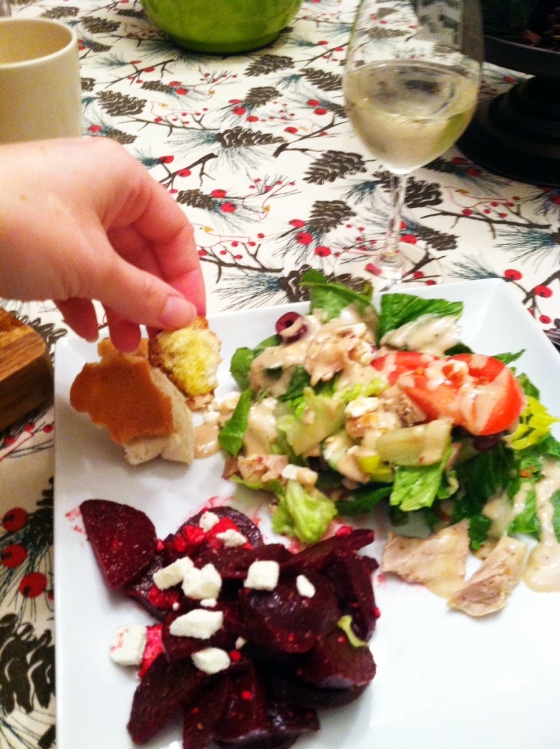
Served with Greek salad, crusty French bread a Pinot Grigio.

Served with Greek salad, crusty French bread a Pinot Grigio.

If you don’t like beets like this, then I grant you the right to dislike beets. But before you file them away in things that are gross and that you refuse to eat, please try this recipe. Please. Give beets a chance.

Note: these beets were purchased from Westside Produce and Provisions where they were sourced from New Earth Farms in the Pungo area of Virginia Beach, where they use sustainable and organic growing methods. 

Shop Locally

I write a monthly column for a local publication called Tidewater Women called “What’s in Season” (you can see all my other publications and press on my MORE BEETS page). The column usually just reviews whatever local produce is around that month, where you can get it and then a few recipes on what to do with it. But for December, I was inspired to write something more . . . well, inspired. More like my holiday mantra, if you will. The column is below, in it’s entirety and can be found in its original form on the Tidewater Women Website.

Shop Locally

The holidays are upon us, and there is no escaping them. As I contemplate what I love about the holidays, I must confess that shopping is not one of my favorite things. It isn’t that I hate giving people things or that I’m not generous. It’s just that the materialism of the whole thing really weighs me down. After my 15th trip to Target or my 5th Amazon order of the season, shopping just starts to feel meaningless. What is this stuff? Does the person I’m buying for need it? Where did my money just go? What multinational, billion-dollar corporation did I just stuff the pockets of?

I know I’m not the only person looking for a more meaningful way of giving, and so I offer up a solution: shop local. There are several reasons to shop local this season. The gifts are more likely to be unique or one-of-a-kind. Shopping local helps support your local economy. It helps support an artisan, farmer, producer, or craftsman, therefore ensuring that these members of our community have a better holiday season. Finally, the gifts will seem thoughtful and creative.

My 30+ person extended family does a Pollyanna-style gift exchange every Christmas, and last year the gift I contributed was a locally themed basket of goodies, which included goat’s milk soap, locally produced wine, jam, peanuts, and other items representative of Hampton Roads. My cousin Sara ended up getting the basket, and I told her if she didn’t like it, I would switch gifts with her. To my delight she loved it! She even texted me a few months later when her soap ran out, asking where she could buy more. She appreciated the thought, creativity, and uniqueness of the gift. She didn’t mind that it wasn’t the latest and greatest piece of technology or a gift card to her favorite store or that it didn’t hold the highest dollar value. The basket of locally sourced gifts meant way more than that because it represented a half a dozen family-owned companies or producers, all being supported by my local purchases.

Here are some great ways to shop local this season. Many farmers markets are holding special holiday markets including Old Beach Farmers Market on 19th street at the Oceanfront in the Croc’s parking lot, which will have a holiday market on December 15. Additionally the Portsmouth City Farmers Market will be open every Saturday through December 22, the Smithfield Farmers Market will be open for holiday markets on December 1 and 15, and the Virginia Beach Farmers Market on Dam Neck Road is open every day, year round.

Several retail outlets also carry locally produced items, such as Heritage Natural Market on Laskin Road, Westside Produce & Provisions on Colley Avenue, and any of Taste Unlimited’s six locations. You can also sign up for Coastal Farms Co-op, which sources products from over 50 area farms and producers and uses an online ordering system with weekly drop-offs all over Hampton Roads. A co-op membership or CSA subscription would also make a great gift for the person who has everything. And while there is not a lot of variety in fresh produce at the moment, there are still wonderful local food items that make great gifts—like fresh baked bread, homemade dried herb seasoning, jams and jellies, salsas, cheese, honey, peanuts, wine, and more.

So this holiday, skip the long lines at the store and start a shop-local revolution! The person on the receiving end of your gift is sure to be delightfully surprised and possibly inspired to support, shop, and give local themselves next year.
For more information on the markets and businesses listed above, visitwww.buylocalhamptonroads.org

Rachel Burns
 is the director of Buy Fresh Buy Local Hampton Roads. Visit 
www.buylocalhamptonroads.orgwww.facebook.com/buylocalhr, and www.twitter.com/buylocalhr.